


Findings is a monthly newsletter on the influences and trends that are quietly shaping our culture by Mouthwash Studio. This post may be too long for email, read online for the best experience.
If this was forwarded to you, consider subscribing for future posts.

I. THE AGE OF GRIFT
Last week, the LA office received a physical letter in the mail. A notice with a case number and a letterhead that looked expensive to print. Somebody wanted $600 for the ‘unauthorized use’ of a stock photo of the Longerberger basket that ran in a Findings piece a few weeks back.
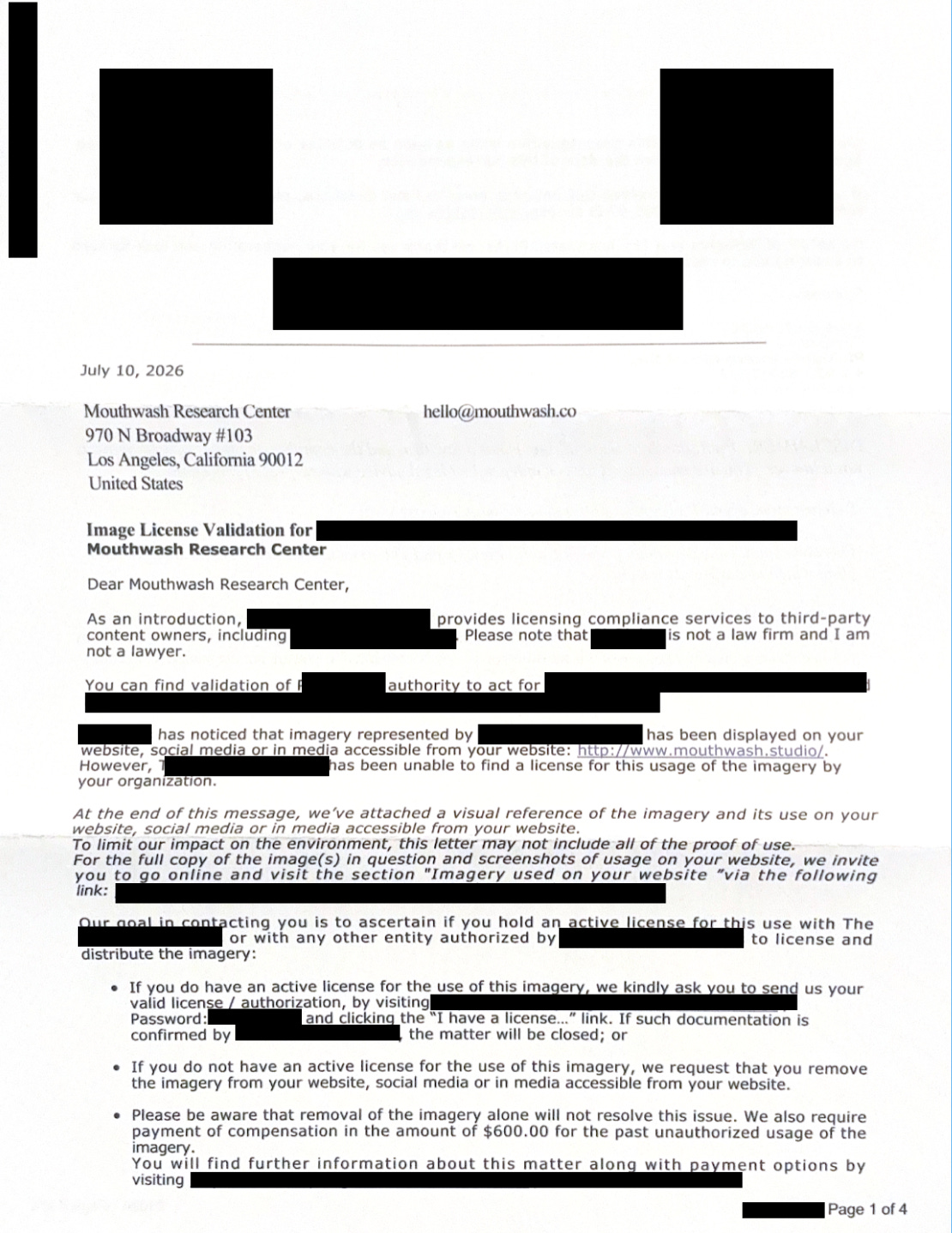
My first instinct was to frantically scan and see what we could have possibly done wrong. So wrong that somebody might go through the trouble of sending us physical mail. It took ten seconds to realize it was just a photo we’d pulled off the internet, the same way we’ve been pulling images off the internet our entire working lives. If it were actually serious, they’d call. If it were urgent, they’d email or DM us on Instagram. In 2026, a letter, case number, and deadline in courier font feels more like costume than threat.
These letters rarely come from rightsholders or their lawyers, and more often from third parties who’ve built businesses around “rights protection” — a stated purpose that, in execution, looks a lot more like profit extraction at scale. Automated and sent wide, banking on the fact that most people would rather pay $600 than find out if the claim is real.
As for the letter we received, we’re currently investigating to see if it’s legitimate. The more interesting thought that has stuck with us is that it almost doesn’t matter. Legitimate notices now look exactly like the scams we’ve trained ourselves to dismiss.
This issue of Findings, like those that have come before it, asks how we got here and where we’re heading. In an age of grift, deepfakes, and AI acceleration, how do we navigate a world where trust is quickly diminishing?
In an age of grift, deepfakes, and AI acceleration, how do we navigate a world where trust is quickly diminishing?
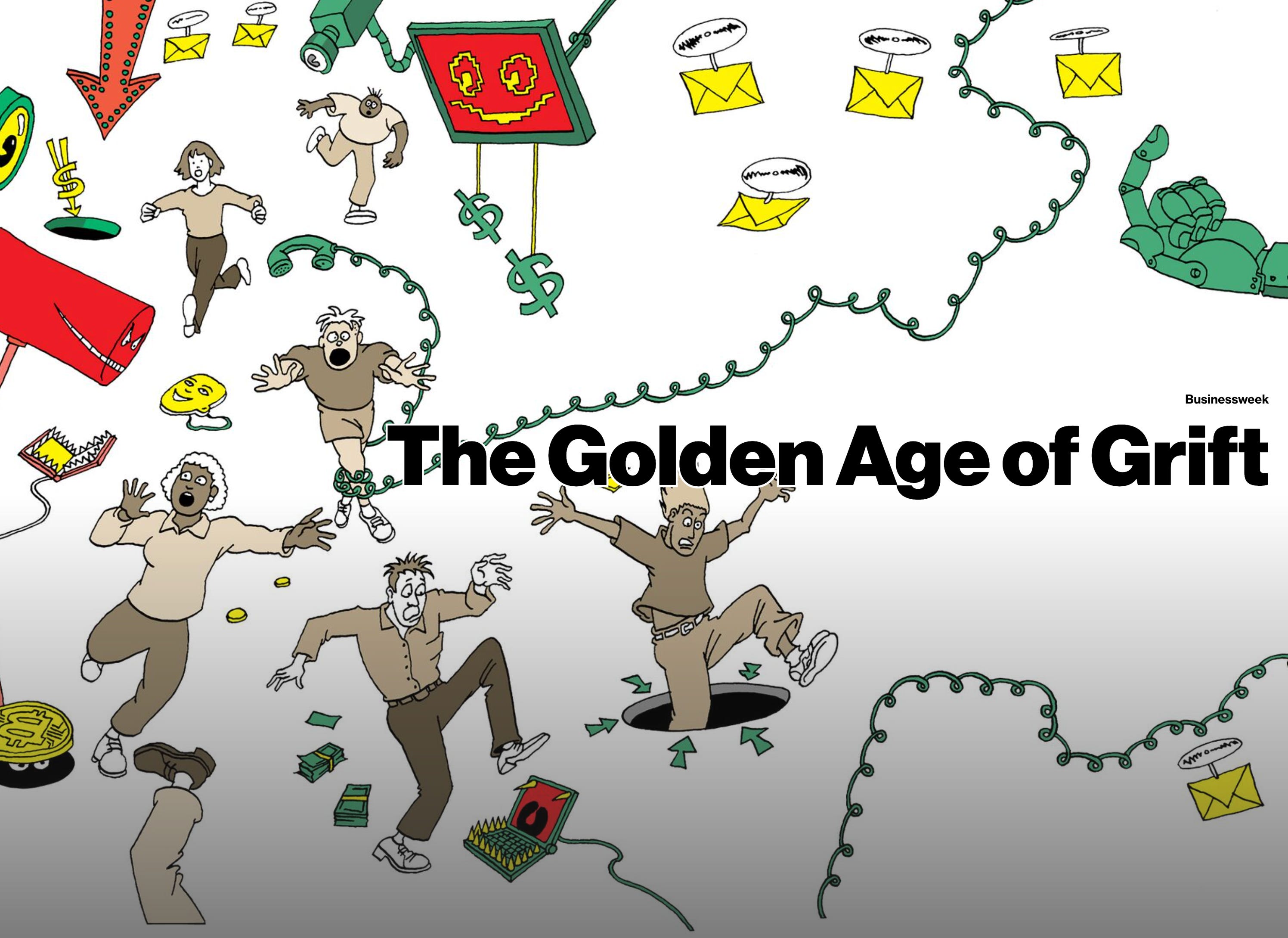
It’s never been a better time to be a scammer. Between 2020 and 2025, US scam losses from imposters nearly tripled. Estimated losses from fraud and scams have exceeded $1 trillion, more than the global drug trade. And if scamming were a country, its GDP would be more than double that of Argentina or Sweden.
New technology has only made scams faster and easier. Two years ago, an employee of engineering consultancy ARUP, was duped into sending $25M USD by deepfake imposters posing as senior staff. It used to be that getting on a call was enough to verify that someone was real.
Now, FaceTime could be FakeTime.
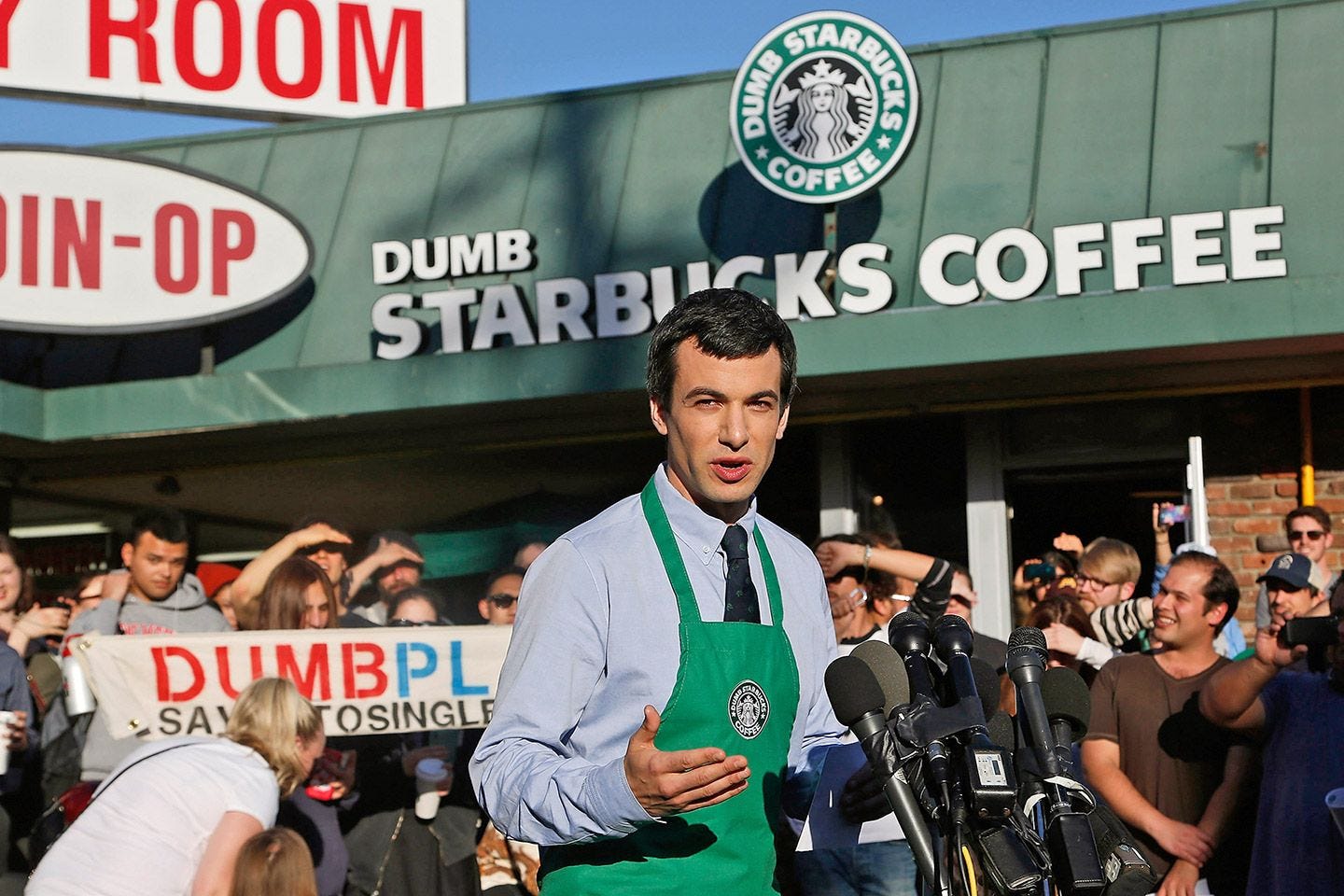
We love the cunning of fraudsters, and there’s no shortage of media to feed that obsession. There are Peabody winning podcast series detailing fraudsters, a myriad of books, and for four years, we reveled in watching Nathan Fielder terrorize unsuspecting small business owners with terrible advice. Scam stories flatter us, too, giving us the vertigo of being deceived with none of the costs—and we walk away certain that we’re smarter, faster, that we would have seen it coming (No you wouldn’t).
The clean, easy-to-spot version of a scam seldom fools us any longer, such as The Nigerian prince email or fake real estate listings on Craigslist. Meanwhile, there is a whole new wave of tricks that are sitting in the gray. The institutions that we’ve been told are legitimate have given us enough reasons to believe that not everything is worthy of trust.
II. SCAM 101

In 1857, Herman Melville published The Confidence-Man, a novel about a shapeshifting swindler working his way down the deck of a Mississippi steamboat, each disguise built to exploit a different flavor of human faith. A century later, linguist David Maurer wrote The Big Con, a field study of professional grifters built from hundreds of hours of direct interviews.
Reading the texts together, you can start to draw four corners of a scam. Melville gives us the psychology of the mark—an exchange of value, and a withheld piece of information the mark never gets to see. While Maurer gives us the mechanics—concealment of the trick itself, and the near-total absence of consequence once it’s over.
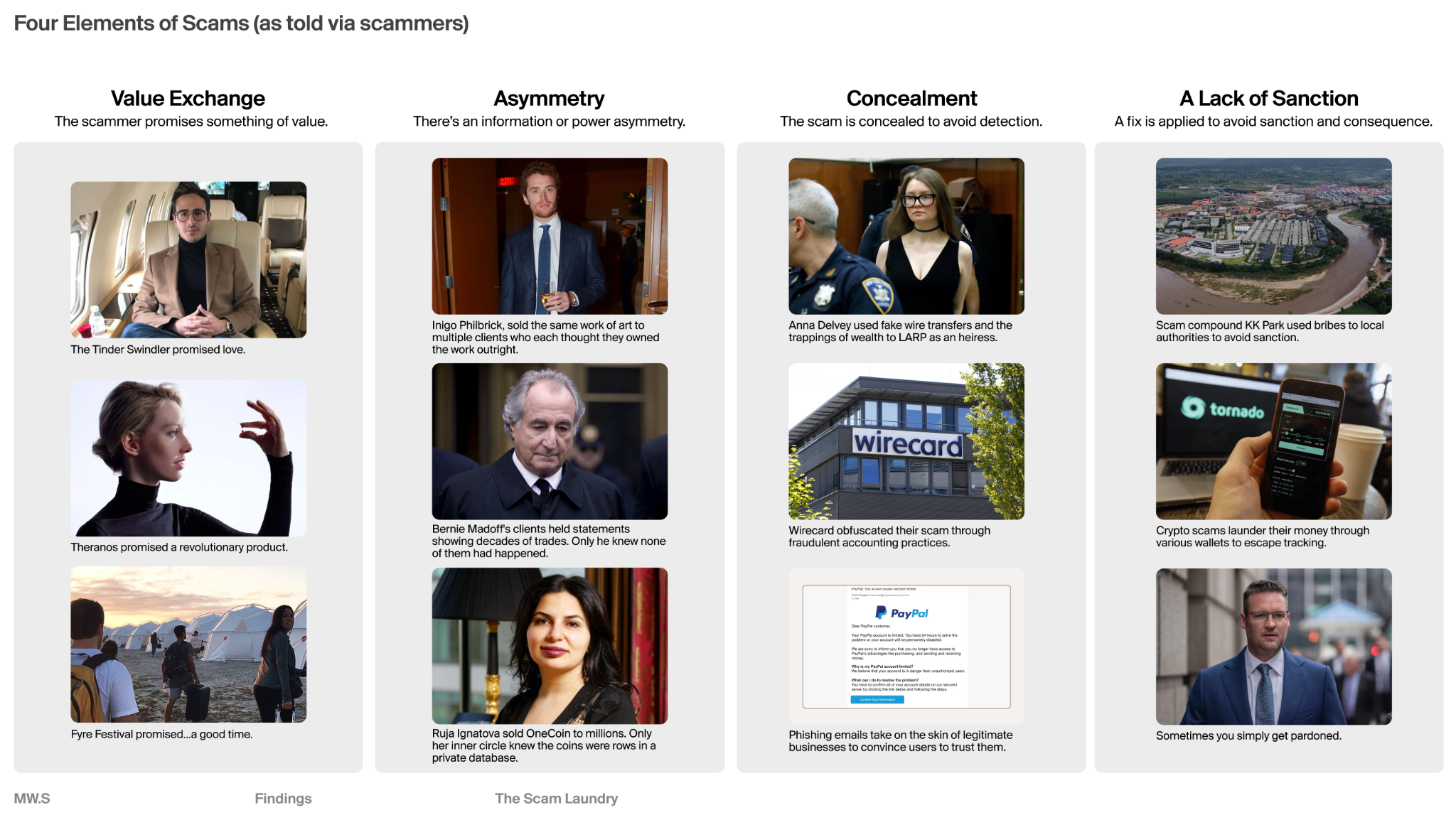
At their core, all scams are an exercise in drawing down our willingness to trust in return for something of value whether that’s money, love, or simply altruism.
III. SCAM LOGIC GONE MAINSTREAM
Scams haven’t changed much since Melville’s steamboat, but how it gets exploited most definitely has. The legitimization of scam behavior has moved upstream using three techniques. One legislative. Two cultural.
It starts with legal cover. Picture the IPO road show: the founder on stage, the “hockey stick” slide, a metric invented specifically for the deck (WeWork’s now-infamous “Community-Adjusted EBITDA” is the blueprint) buried eleven pages into a prospectus that only a securities lawyer might read.

It checks every box: value exchanged for a stake that investors never sees, information asymmetry, concealment dressed up as “sharing in the growth,” and a lack of sanction achieved by staying inside the letter of a law it’s violating in spirit. If it’s technically legal, the thinking goes, it can’t really be a scam. Health insurance exclusions and software terms of service run the same play.
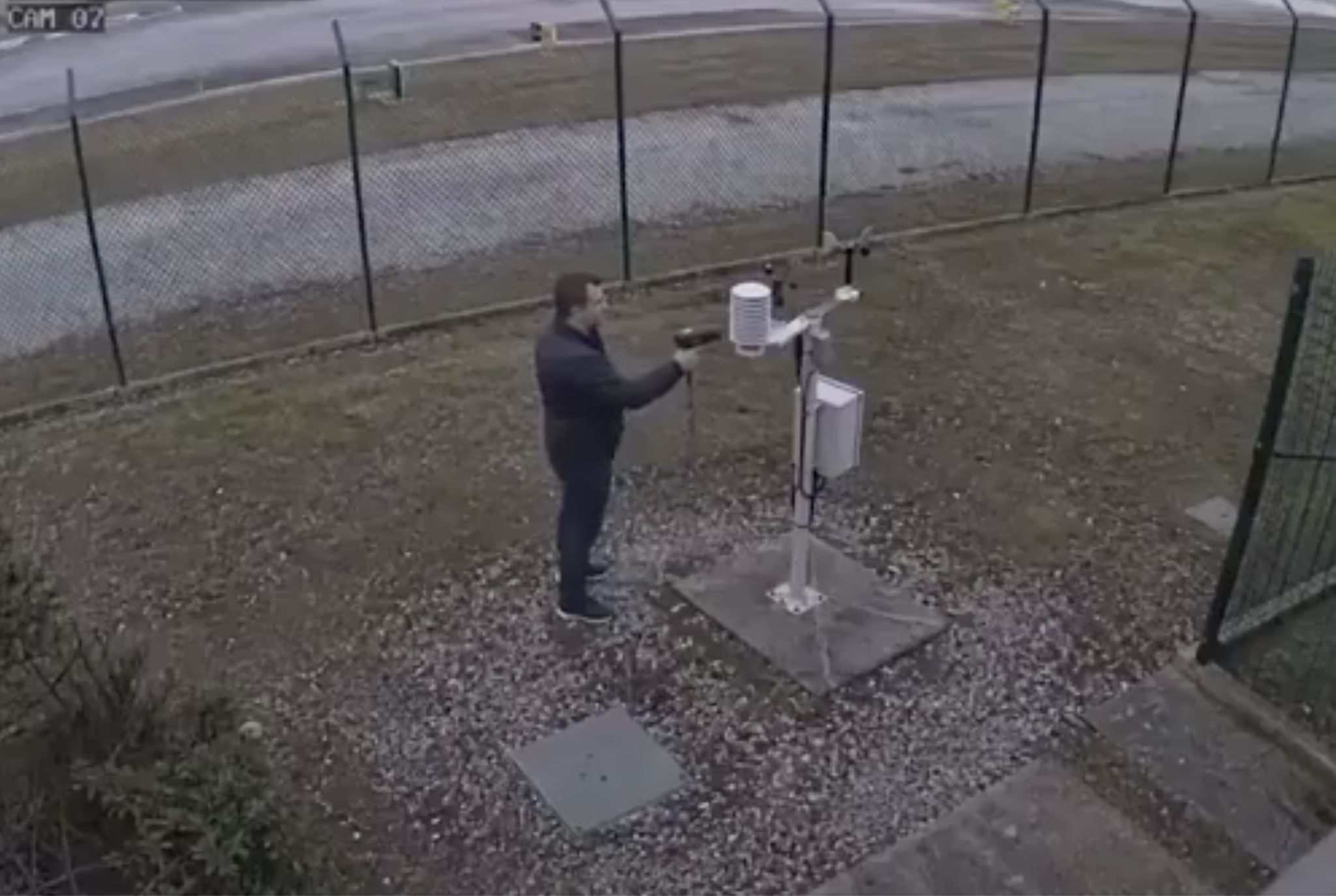
The habit slides easily into sheer ubiquity. Like a frog being boiled slowly, we are exposed to scam practices until they envelop us entirely. We’ve already made peace with digital media we never really owned, surveillance pricing tuned to our exact pain threshold, and skimpflation. Prediction markets are unfolding this in plain sight: some $200M in Polymarket trades this year bear the hallmarks of insider activity, and one user recently made $20,000 by tampering with weather sensors to win a bet. Insider trading became “outsider“ trading.
Once something is both legal and everywhere, the cherry on top is to target somebody or something that culture is happy to see lose. You could call it an ethical scam. Writing for 032C, Daniel Moldoveanu describes scammers who deliberately target institutions too large and abstract to feel like real victims, such as banks, chains, and conglomerates—treating the con as its own reward. A way of getting a little “closer to reaching Nirvana.”
A friend of mine growing up used to say stealing from Walmart was permissible because, well, they’re evil. It’s the same logic that turns Anna Delvey into a folk hero, and the same logic behind the 70% of “friendly” fraud chargebacks Visa attributes to buyers gaming their own bank.
The techniques taken together result in a culture that no longer extends trust by default, but rather suspicion, adopting the same level of ruthlessness that is being wielded against them.
As the saying goes, two can play that game.
IV. TRUST AS A PRECIOUS RESOURCE
Roman emperors used to shave the silver content out of the denarius while keeping its face value the same, and it worked for a while. People eventually caught on and started hoarding the older, purer coins at home and only spending the debased ones. Economists named this Gresham’s Law, the idea that bad money drives out good. As you could imagine, swapping silver coins for trust plays out the same way. The less anyone can tell a genuine signal from a manufactured one, the more people pull the real thing out of circulation and hold onto it for themselves.
And as resources dwindle, it lays up an opportunity for somebody to sell it back to us. In 1933, FDIC deposit insurance was created to sell Americans back their faith in banks after a decade of runs and failures. Today, entire businesses are built on the premise of security and privacy, while the biggest names in tech are trying to save what’s left by ensuring that you can in fact trust them.
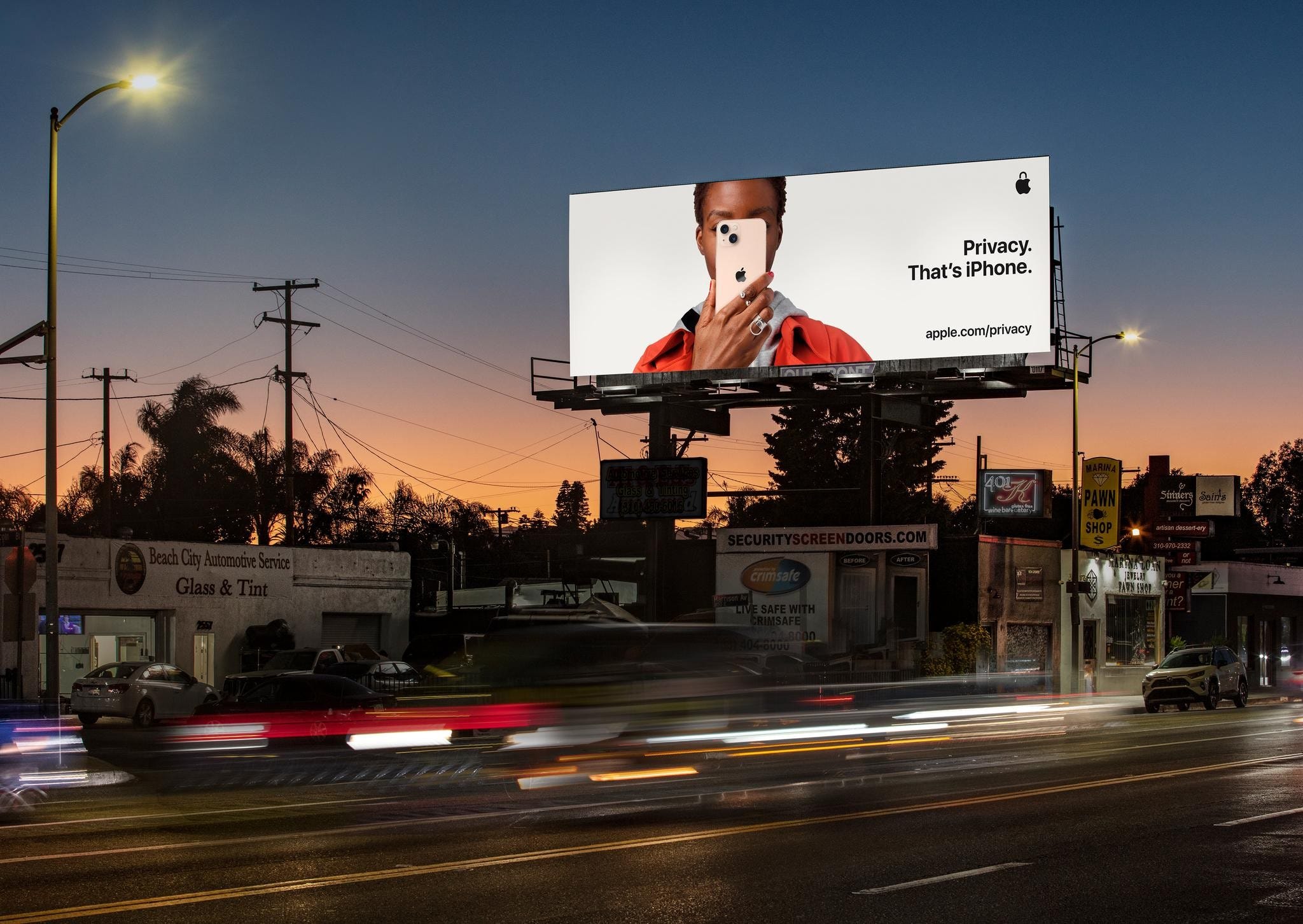
It won’t be too long before idioms like “Trust your gut” and giving somebody the “Benefit of the doubt” will erase themselves from the tips of our tongues, while messages like Equinox’s “Trust no one but yourself” campaign make themselves even more present—a message camouflaged as aspirational because we’ve already agreed collectively that the default is fake.

To that end, building anything that depends on belief has become more difficult than ever. Consumers are smarter, more skeptical, and increasingly fluent in the mechanics of persuasion. They turn away from polished promises and toward people, looking for proof that there’s still something real beneath the performance. Scam culture has taught us that neither assertion nor polish is enough to earn belief anymore—both of which are cheap and easy to manufacture.
There are a million reasons to question, “Is this real?”
Meaning the future belongs to whoever gives us the fewest reasons to ask.
Thanks for reading
Findings is a project by Mouthwash Studio, a design studio centered on new ideas and defining experiences. Learn more about what we’re doing with Findings here. In the archive, you’ll find all our work to date surrounding this project.
This publication is 100% free and is supported by your time and appreciation. If you liked reading this, please share it with somebody who you think might also enjoy it.
Is there something we should cover? Respond to this email or send us a message at findings@mouthwash.co to get in touch.