

Findings is a monthly newsletter on the influences and trends that are quietly shaping our culture by Mouthwash Studio. This post may be too long for email, read online for the best experience.
If this was forwarded to you, consider subscribing for future posts.
I. A TRIP TO NOWHERE
In search of fame and fortune, an attractive stranger arrives in a land at the edge of the known world. Immediately admired by the locals, their beauty makes them interesting. Their body makes them legible. Before long, simply looking the part has acquired a kind of social currency.
If this sounds like Los Angeles, it’s tempting to keep reading it that way.
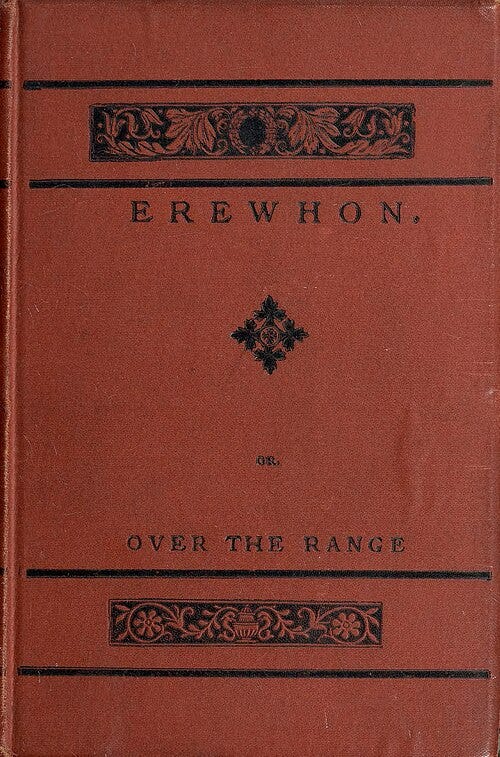
This is actually the story of Erewhon. Not yet the famed grocery store, but the fictional country from which it borrows its name. In Samuel Butler’s satirical novel, an English traveler discovers a civilization where machines are feared, illness is criminal, and the rules of ordinary life have been turned upside down.
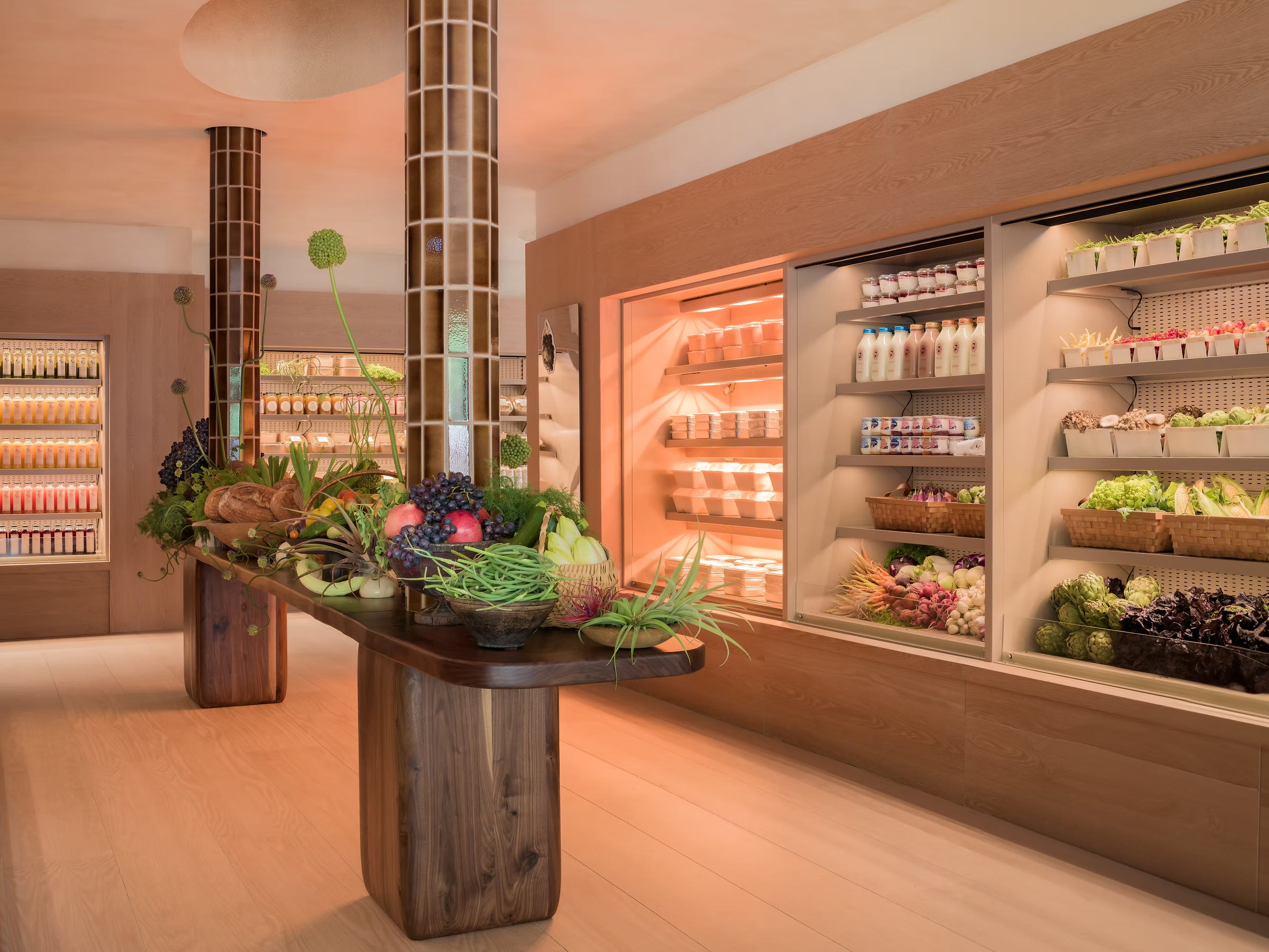
Outside an Erewhon location in Beverly Hills or Calabasas, a different kind of topsy-turvy world has taken shape. What began as a humble health food store has become a cultural phenomenon—part store, part shrine, part status symbol.
The grocery store was, of course, designed for a very different purpose. It was supposed to feed us. So, how did it become a place to practice being someone else?
II. THE ORIGINS OF AN EMPIRE
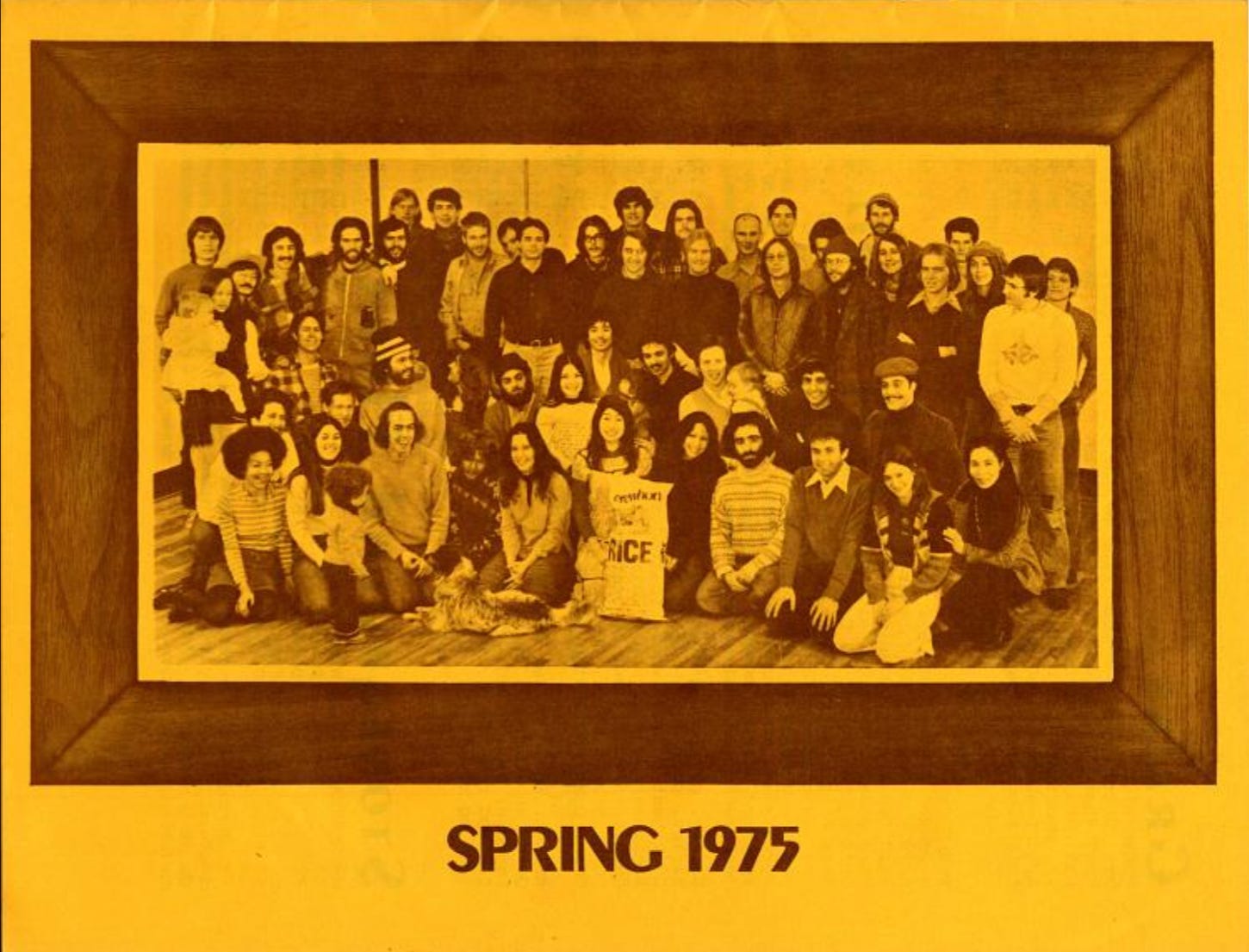
In 1966, Aveline and Michio Kushi opened a grocery store in Boston. The Kushis were students of George Ohsawa, whose macrobiotic philosophy connected food with health, happiness, and a broader way of living. They named the shop after Erewhon, a satirical novel by Samuel Butler about a society where illness is treated like crime.
The original Erewhon wasn’t a particularly elevated experience. When Paul Hawken took over in 1967, his focus was on how to make organic options more available, not more expensive. The idea, then, was simple—what you eat shapes who you are.
Sixty years later, the same idea has taken on a life of its own.
III. YOU ARE WHAT YOU EAT
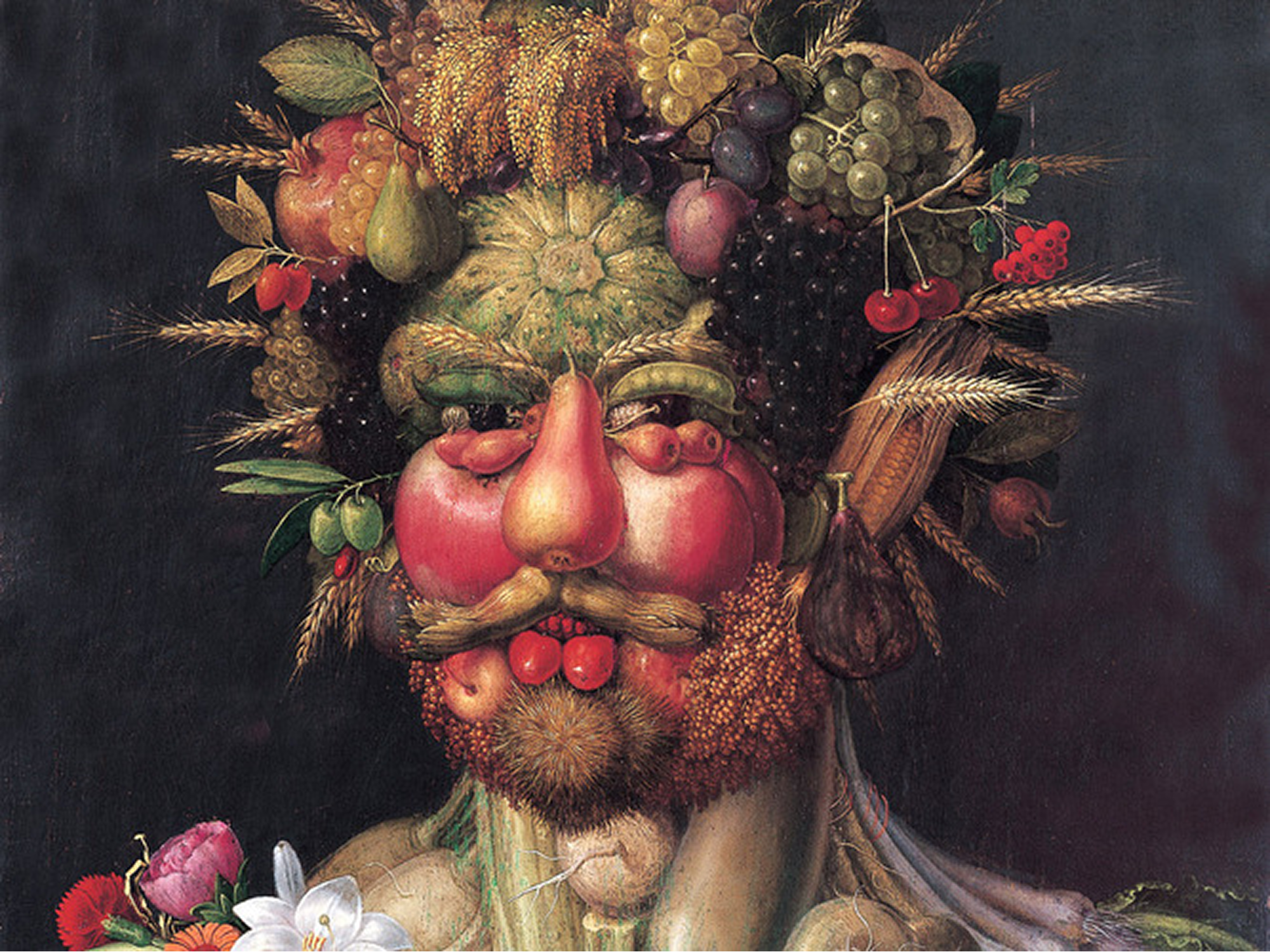
Today, Erewhon is hardly one of a kind. You can find copycats in Los Angeles, New York, and Tokyo, where the Erewhon effect has revealed our growing appetite for big promises wrapped in unique packaging. Designer food, if you will.
Picture someone standing in the grocery aisle comparing two nearly identical products. One costs twice as much. They pick it anyway because the kelp chips are organic, the bee pollen is local, and the bottled water was made with chlorophyll. By the time they reach the checkout line, their cart may still look scarce. That’s not the point.
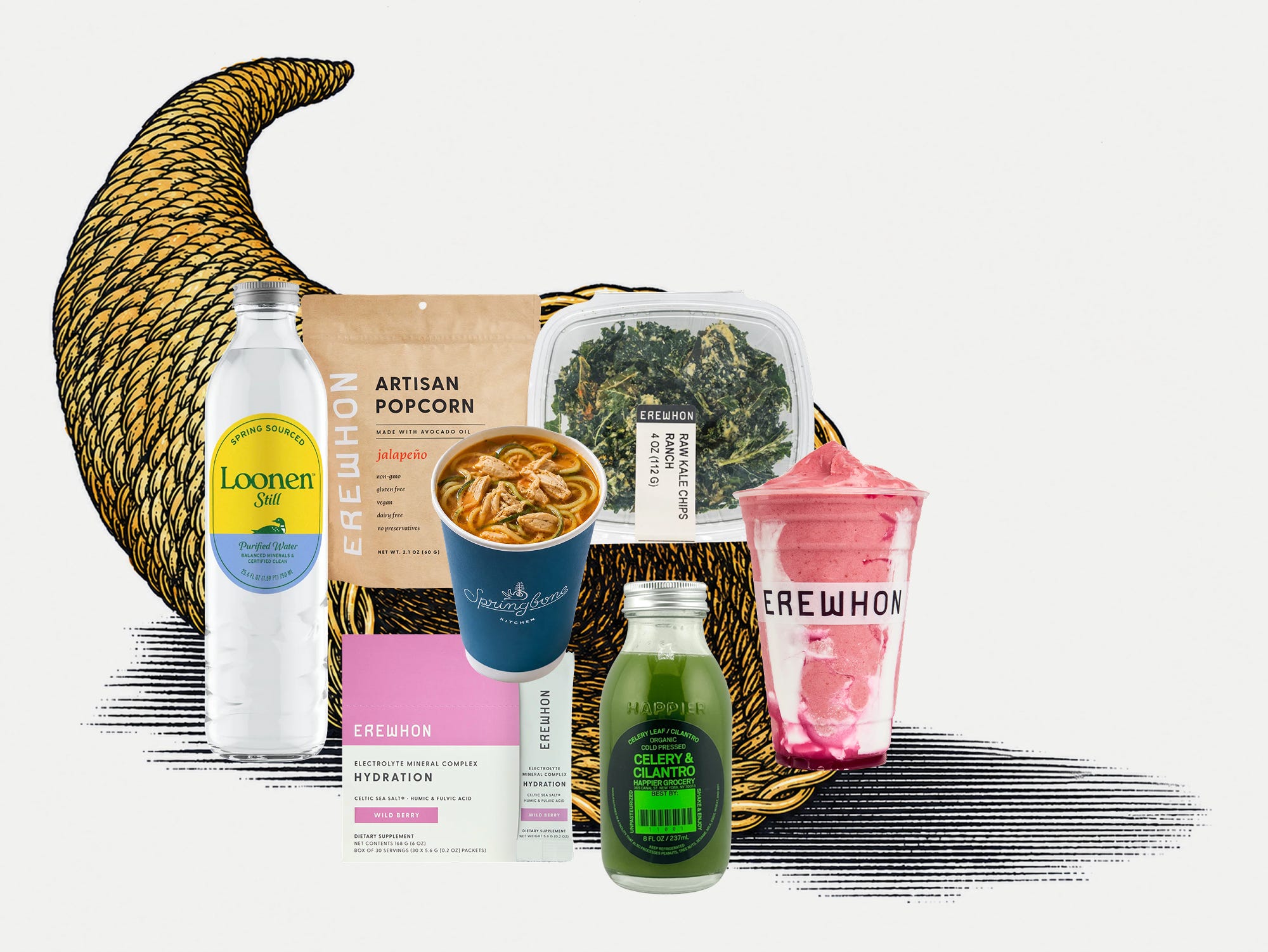
For most of modern history, food was a way to display abundance. A lavish feast wasn’t impressive simply because there was a lot of food, but because the food itself was difficult to get—rare ingredients, seasonal produce, and imported delicacies, all of which required time and labor to reach the table.
Industrialization changed the equation. When mass production turned into mass consumption, the class symbols shuffled. Now, luxury requires both the access to extravagance and the taste to refuse it.
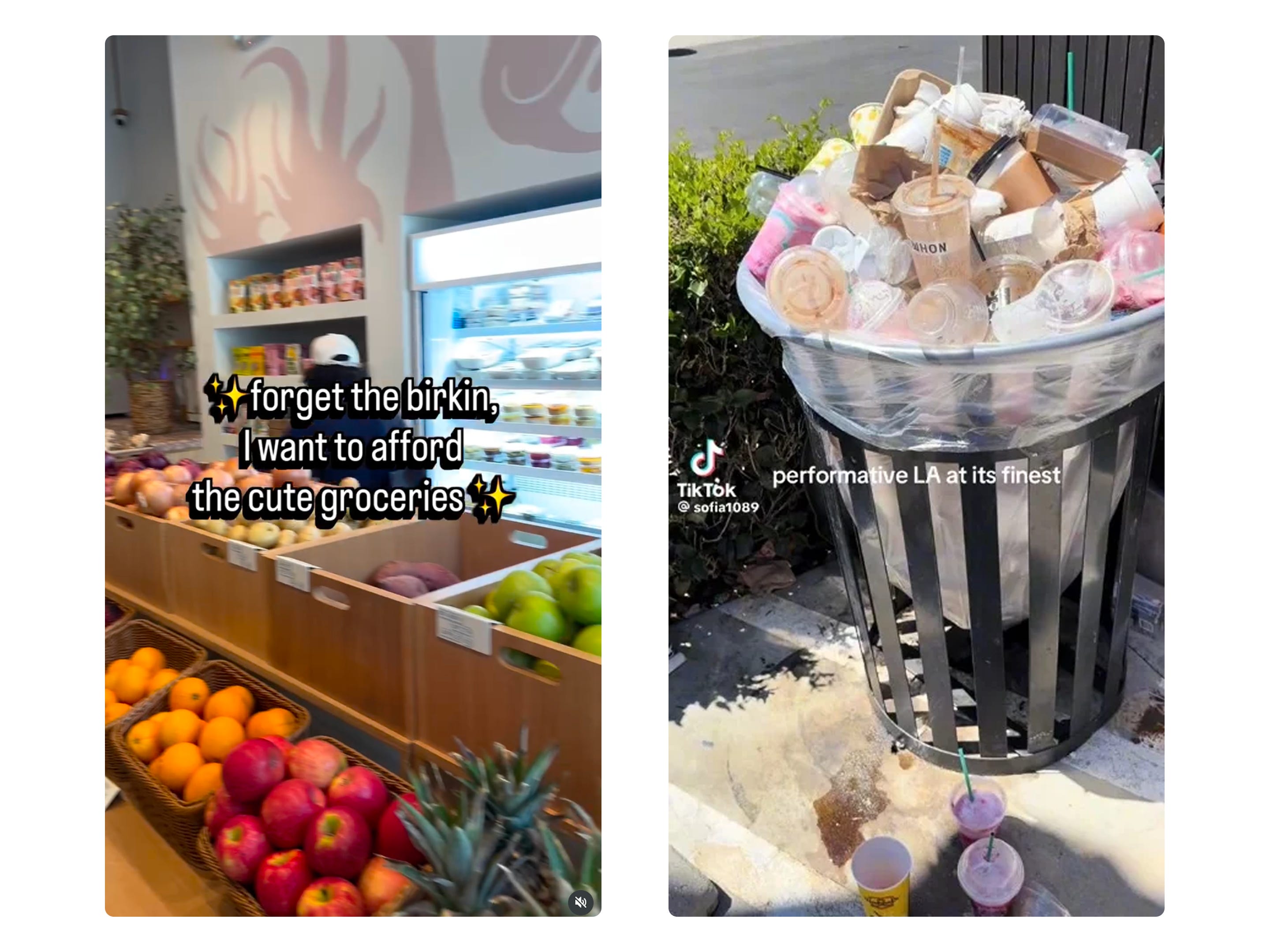
Erewhon is selling the difference. An $18 smoothie confidently declares I can afford this and I might not finish it. What you buy is food. What you get is evidence of the person you hope to be.
IV. FOOD FOR THOUGHT
The supermarket has become a place to practice being that person.
It’s a lesson learned from the department store, which arrived at the end of the 18th century and brought with it the opportunity to rehearse another life. Shortly after, Émile Zola published Au Bonheur des Dames (or, The Ladies’ Paradise), a story that calls the department store a cathedral of modern commerce. His work observed that these emporiums didn’t just stock more items, but staged them—and in doing so, marked a groundbreaking shift from selling products to shaping desire.
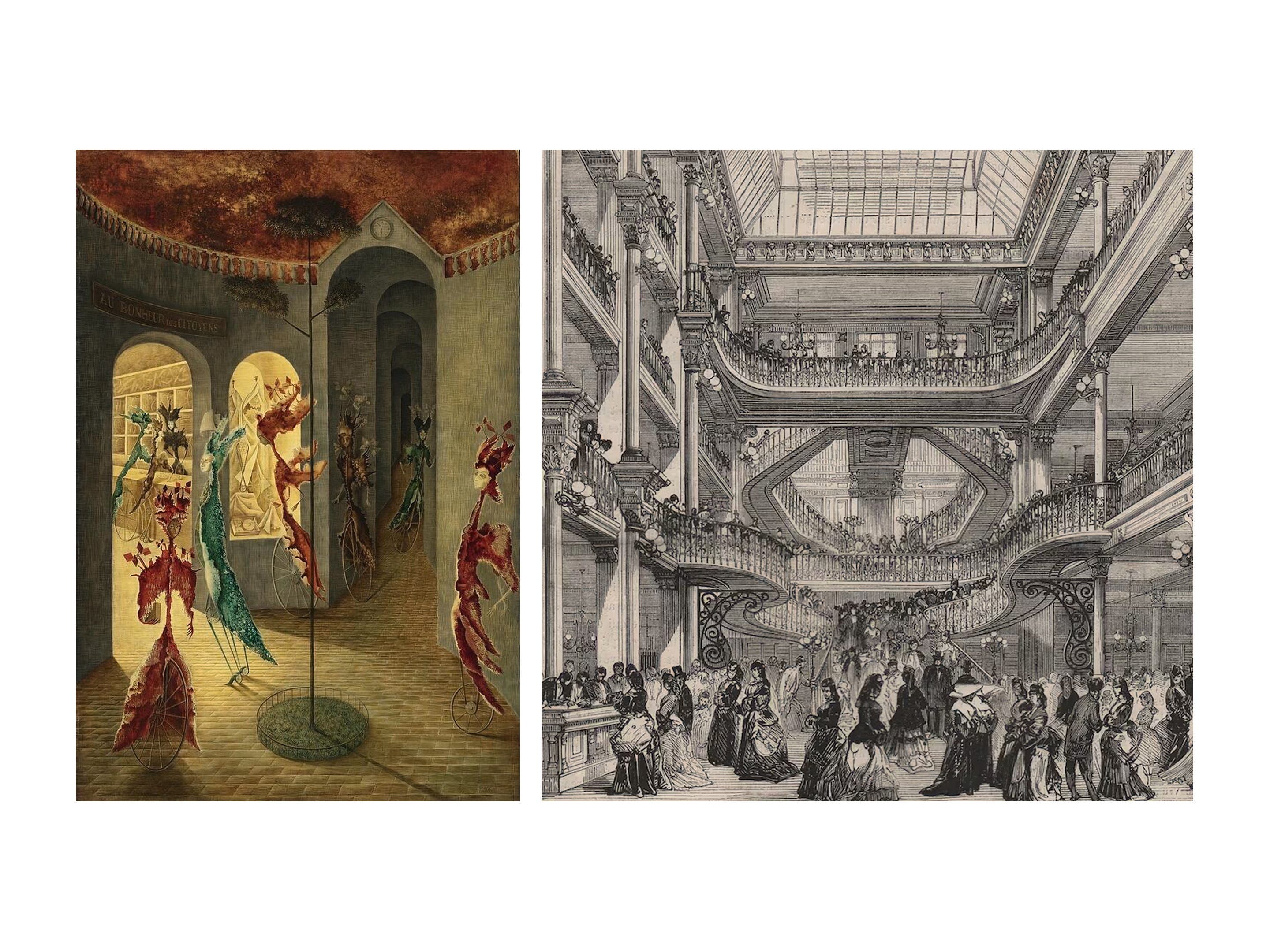
Showrooms, test drives, and free trials quickly followed. Each subscribes to the psychology of small wins—the same practice that powers slot machines and social media. The beauty counter gave women a way to see themselves differently and shop accordingly. The open house invited us to walk through a world we hadn’t yet bought (and probably never would). At Alo’s invite-only influencer gym, you can get an inside look into the life you’ve been scrolling toward.
The grocery store isn’t far off. Singles are looking for love at Erewhon because it filters their dating pool for the same taste in both broth—and, hopefully, the life that comes with it. We may not ever be able to buy the whole house, body, or car we want, but for now, we can have the ingredients that suggest one.
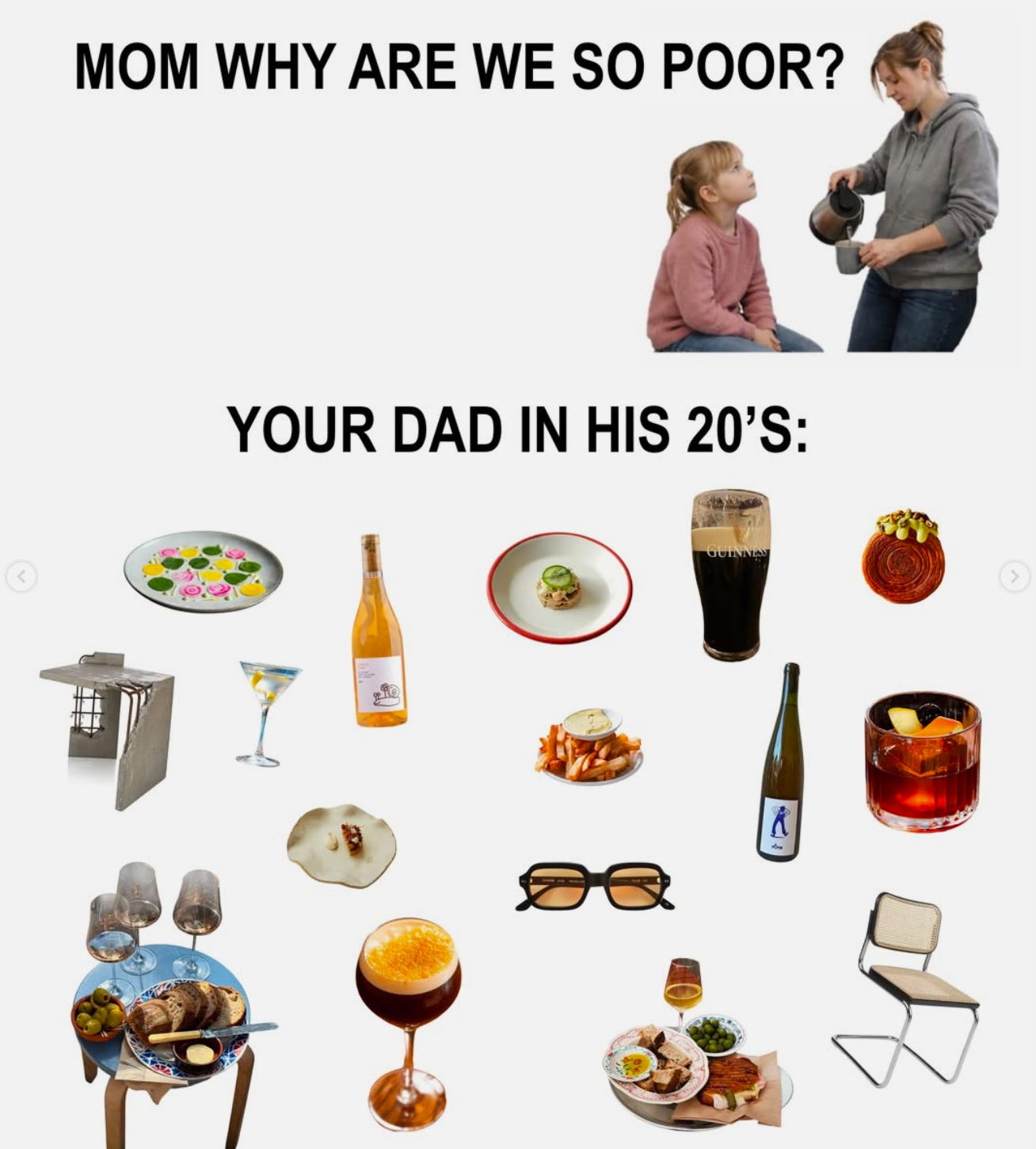
The distinction is that food is an unusually fleeting form of aspiration. A car sits in the driveway, a house stays put, and even a pair of shoes can last for years. The groceries that signal our class, perspective, or lifestyle disappear by dinner. And so, the cycle repeats. Every meal is another chance to enact the identity we crave.

V. A HAUL IS WORTH A THOUSAND WORDS
At some point, the relationship reverses: food stops expressing identity and starts producing it. Even buying less can say more.
The same smaller cart may represent radically opposite decisions. In a uniquely American irony, some are eating less because they want to while others are buying less because they have to. Inflation is outpacing our paychecks—and families across the United States can’t afford the same food they once did. The gap is widening, but $60 sea moss still hasn’t managed to fall in.
Either way, food has come to measure far more than what we consume. Maybe that’s why we’re so willing to go out of our way to get it.
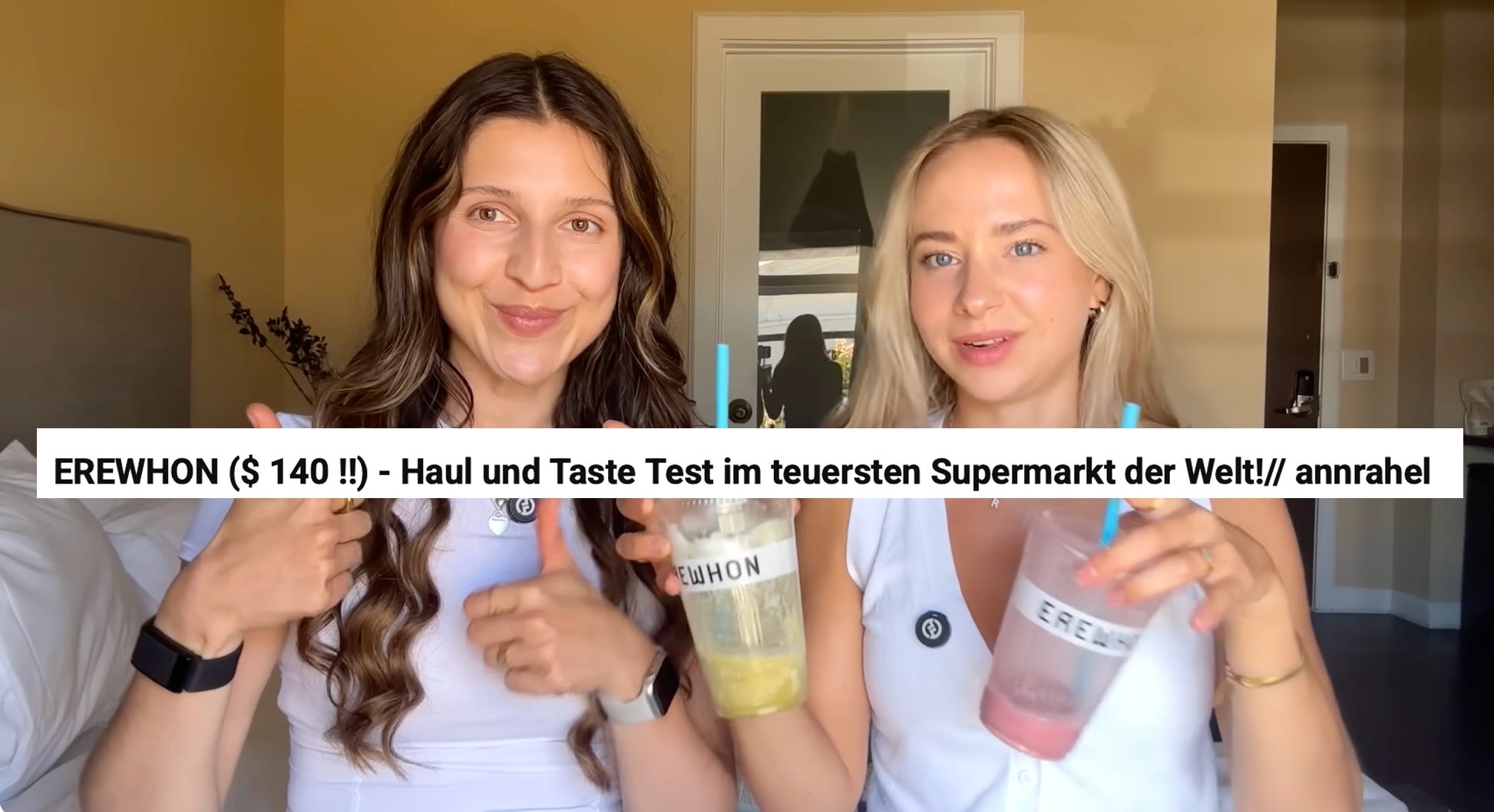
Think of Erewhon as LA’s latest and greatest holy ground. More than 5 million customers make the pilgrimage to its stores every year. The California Gold Rush, by comparison, drew a measly 300,000—none of whom arrived by Cybertruck.
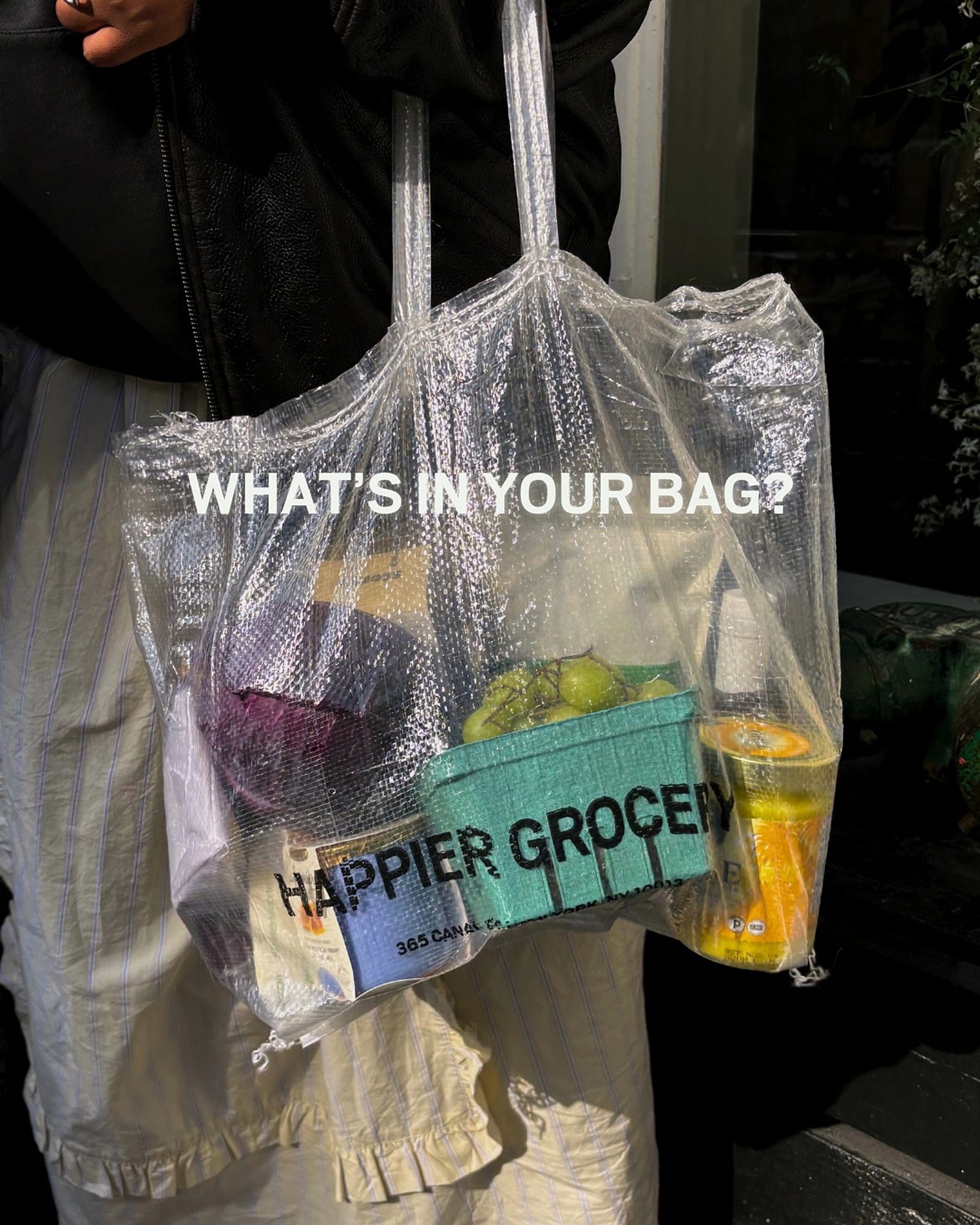
Unlike the Gold Rush, the modern pilgrimage isn't necessarily a once-in-a-lifetime journey. Instead, it can be a daily errand. As in any odyssey, effort functions as evidence of belief. It’s why shoppers drag a Hulken across SoHo to Happier Grocery instead of ordering the same thing online with Instacart. Or, in Erewhon’s case, sit in two hours of traffic on I-10 for the chance at six ounces of goat milk. That is, if you can find a place to park.
This might explain why brick-and-mortar shops keep surviving their own obsolescence. Uber Eats can give you the food, but not the photo op. The grocery store, in other words, gives the identity its stage.
VI. NOW WHAT
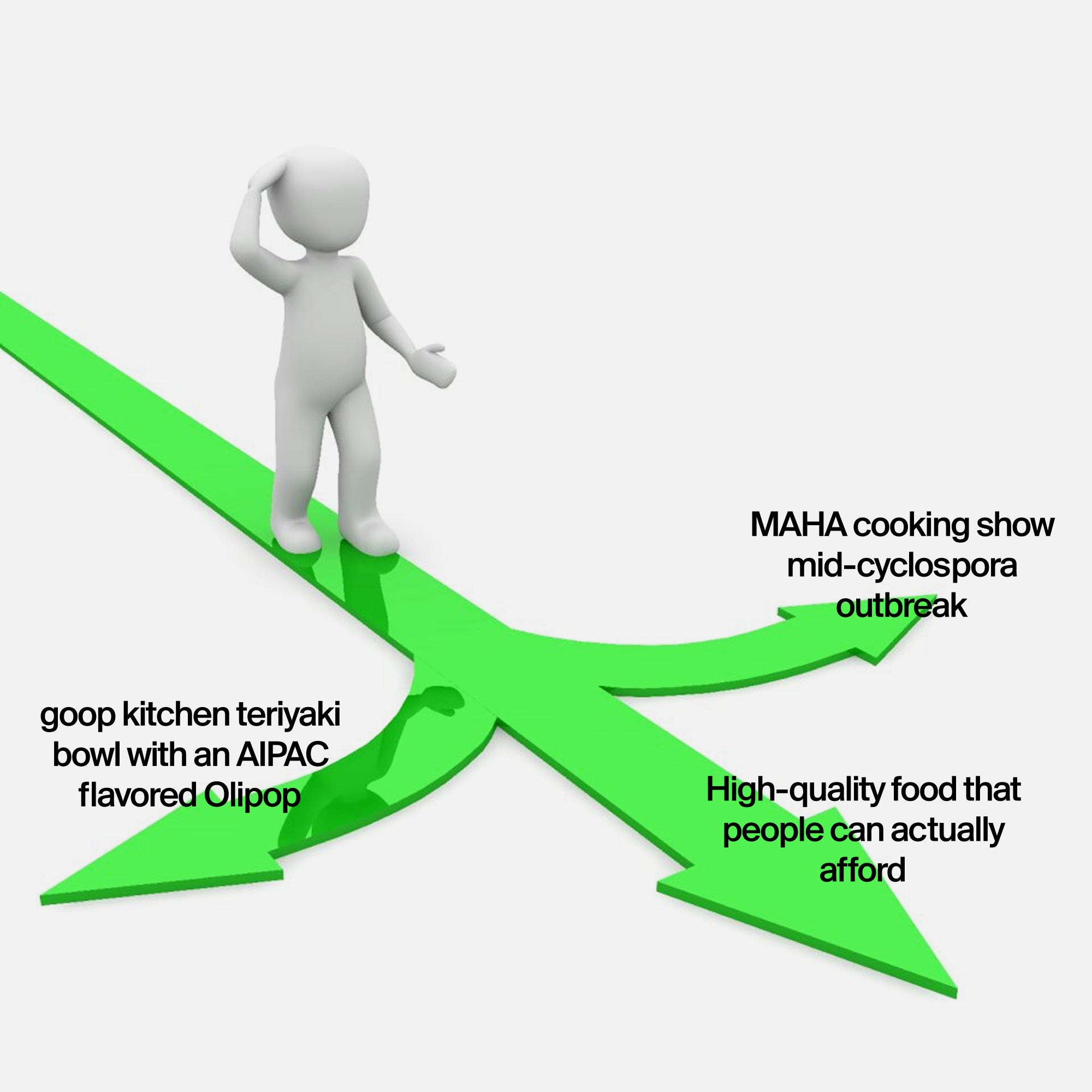
That leaves food at a literal fork in the road.
The old aisles are dissolving because the new ones are organized around something else—our priorities. One aisle for better sleep. Another for more energy. A third for a longer life. The products may differ, but the promise is the same: shop here and leave a little closer to the person you want to be.
It’s easy to imagine where this road leads. A counter for snacks, a clinic for peptides, and a refrigerator for skincare and juice shots. One department to do your bloodwork and another to tell you what it means. Here, we can invest in our whole self—even the parts that don’t exist yet.
There’s nothing inherently wrong with wanting to become a better version of yourself. But food shouldn’t become private equity’s latest playground for selling us back our own wellbeing.
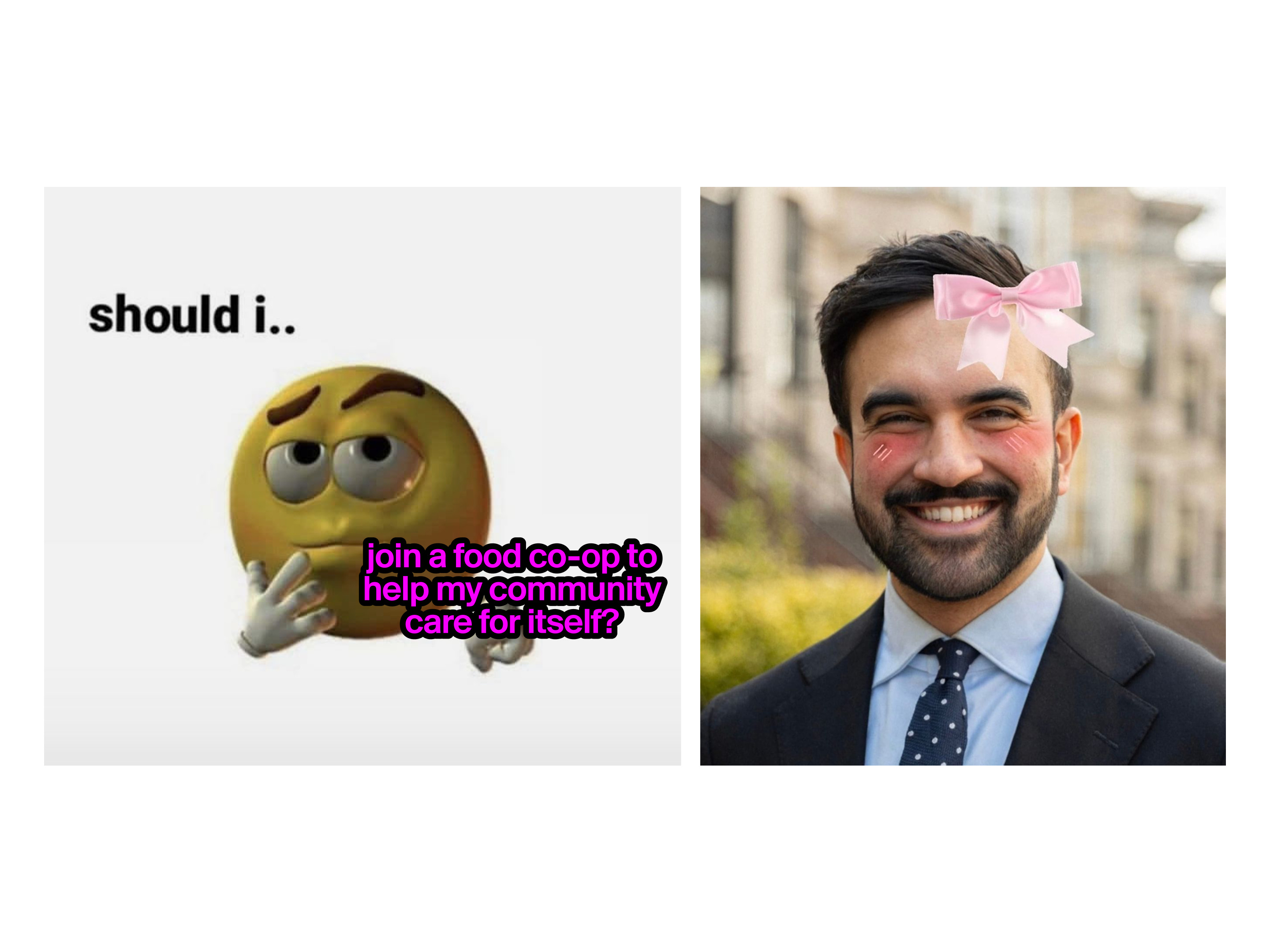
The other option is far more interesting.
The grocery store could become a civic service rather than a retail category. A place with fewer things to buy and more reasons to stay. Cooking classes. Health services. Public resources. Somewhere to encounter people instead of just products. Somewhere that treats good food not as a luxury product or optimization tool, but as infrastructure for a good life.
The possibilities are endless because the category isn’t inevitable.
So, while Erewhon asked whether it could help us become better, the next grocery store may focus on a far more difficult question.
What kind of life does this store help people have?
And, more importantly, who gets to have it?
Thanks for reading
Findings is a project by Mouthwash Studio, a design studio centered on new ideas and defining experiences. Learn more about what we’re doing with Findings here. In the archive, you’ll find all our work to date surrounding this project.
This publication is 100% free and is supported by your time and appreciation. If you liked reading this, please share it with somebody who you think might also enjoy it.
Is there something we should cover? Respond to this email or send us a message at findings@mouthwash.co to get in touch.
“The grocery store was, of course, designed for a very different purpose. It was supposed to feed us. So, how did it become a place to practice being someone else?” 👏