


Findings is a monthly newsletter on the influences and trends that are quietly shaping our culture by Mouthwash Studio. This post may be too long for email, read online for the best experience.
If this was forwarded to you, consider subscribing for future posts.
This edition of Findings features collaborations with digital designer Jakub Zegzulka on a series of speculative prototypes that explore possible technological responses to some of the more unsettling conditions of a bizarre future that we may soon be contending with.
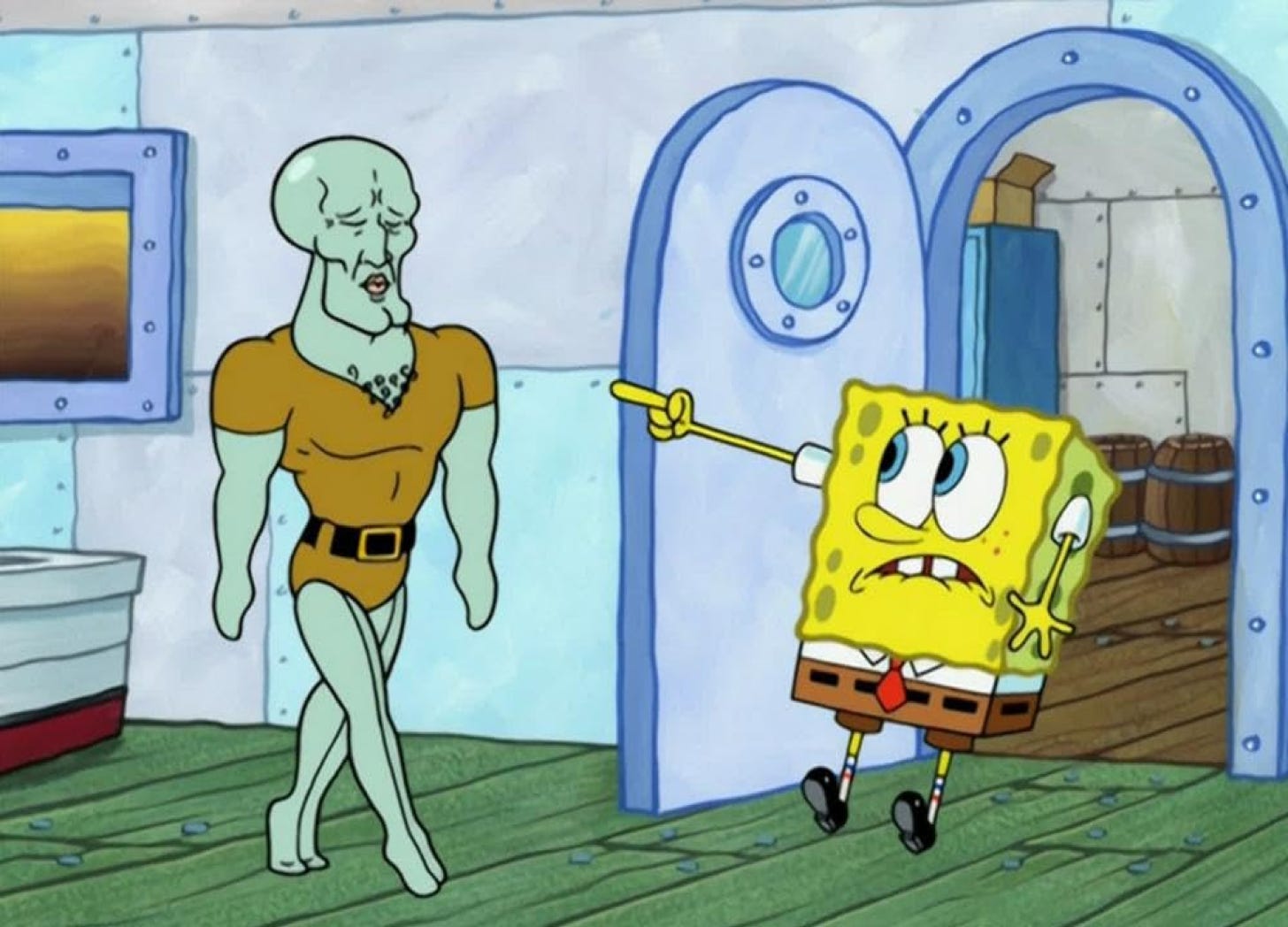
I. YOU COULD BE PERFECT
Remember circa 2018 when every brand was suddenly obsessed with helping consumers ‘express themselves’?
Only a decade earlier, brands were profit farming on the basis of a simple premise: you are not enough yet — but with the right deodorant, perfume, or pair of jeans, you could be. The hallmark of 90s and early 2000s advertising was the glossy sheen of hyper-sexualized and airbrushed aspiration.
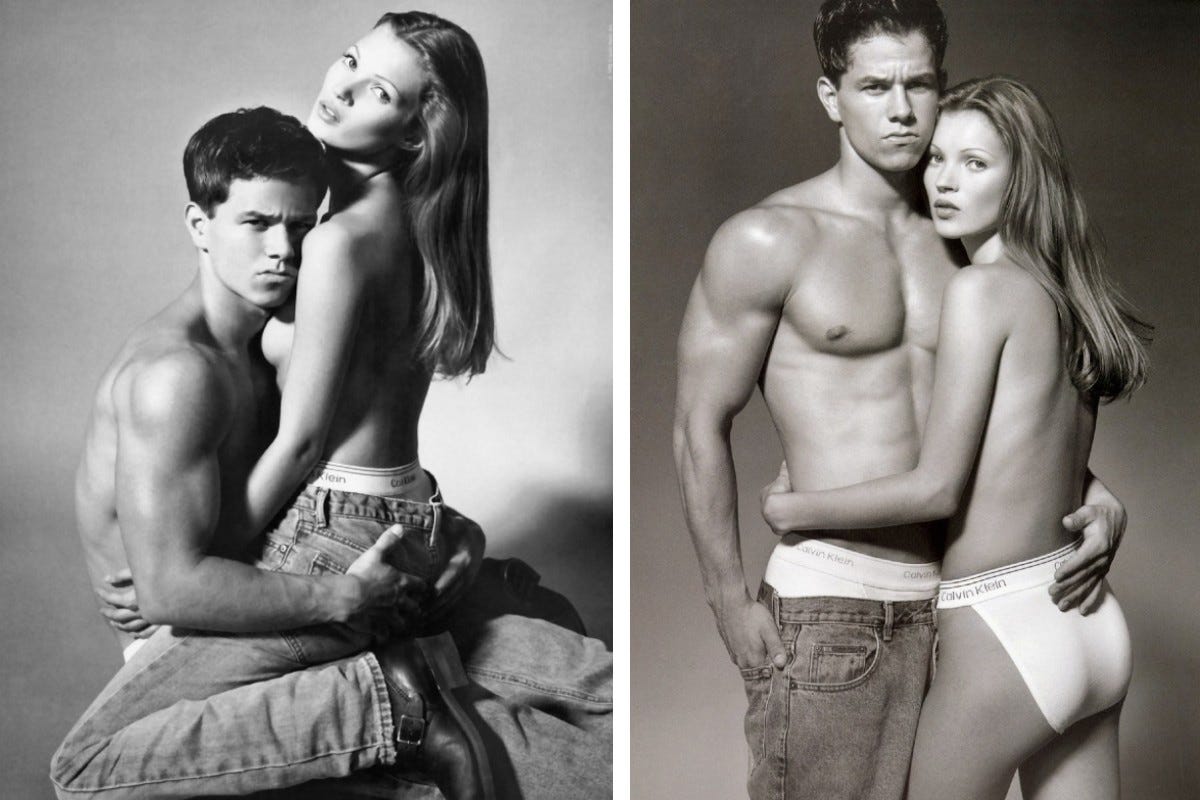
But something shook the pillars of sand upon which this lustrous, unattainable playbook was built. Maybe it was the emergence of fourth wave feminism, maybe the explosion of criticism made possible by social media, or maybe the transmogrification of hipsterdom into activist posturing (perhaps best articulated by Brad Troemel’s Hipster Report).
Whatever the cause, slowly but surely the commercial empires built on sowing insecurity and reaping its rewards came crashing down.
It wasn’t that executives collectively woke up one morning, scandalized by how little a Guess billboard actually “left to the imagination.” The change was less of a moral awakening, and more a cultural inevitability. With social media as a digital megaphone, consumers suddenly had a lot more voice. If people still couldn't directly change what businesses were hawking, they could at least now galvanize the formation of an unhappy, boycotting bulwark. The top-down manufacturing of culture was yet again squeezed.
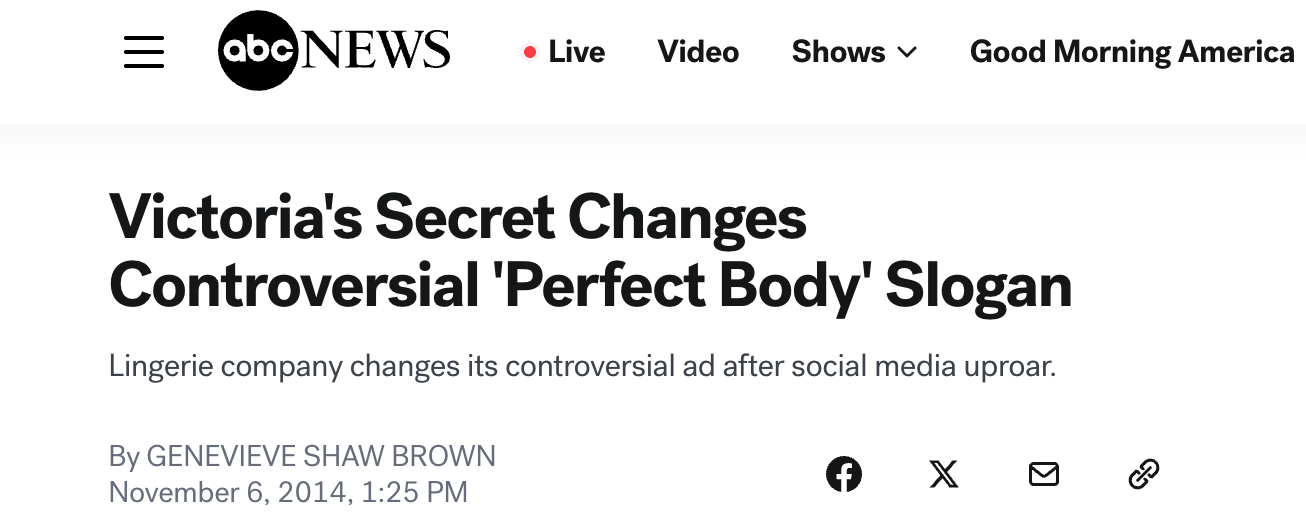
Consumers, especially women, could now coalesce under mutual disdain against what felt like an industrial monolith designed to keep them down.
There was a growing disillusionment with the idea that brands were selling you things so that you could, in turn, sell yourself — an exhaustion with the corporate prerogative of maintaining and leeching off of perpetual dissatisfaction.
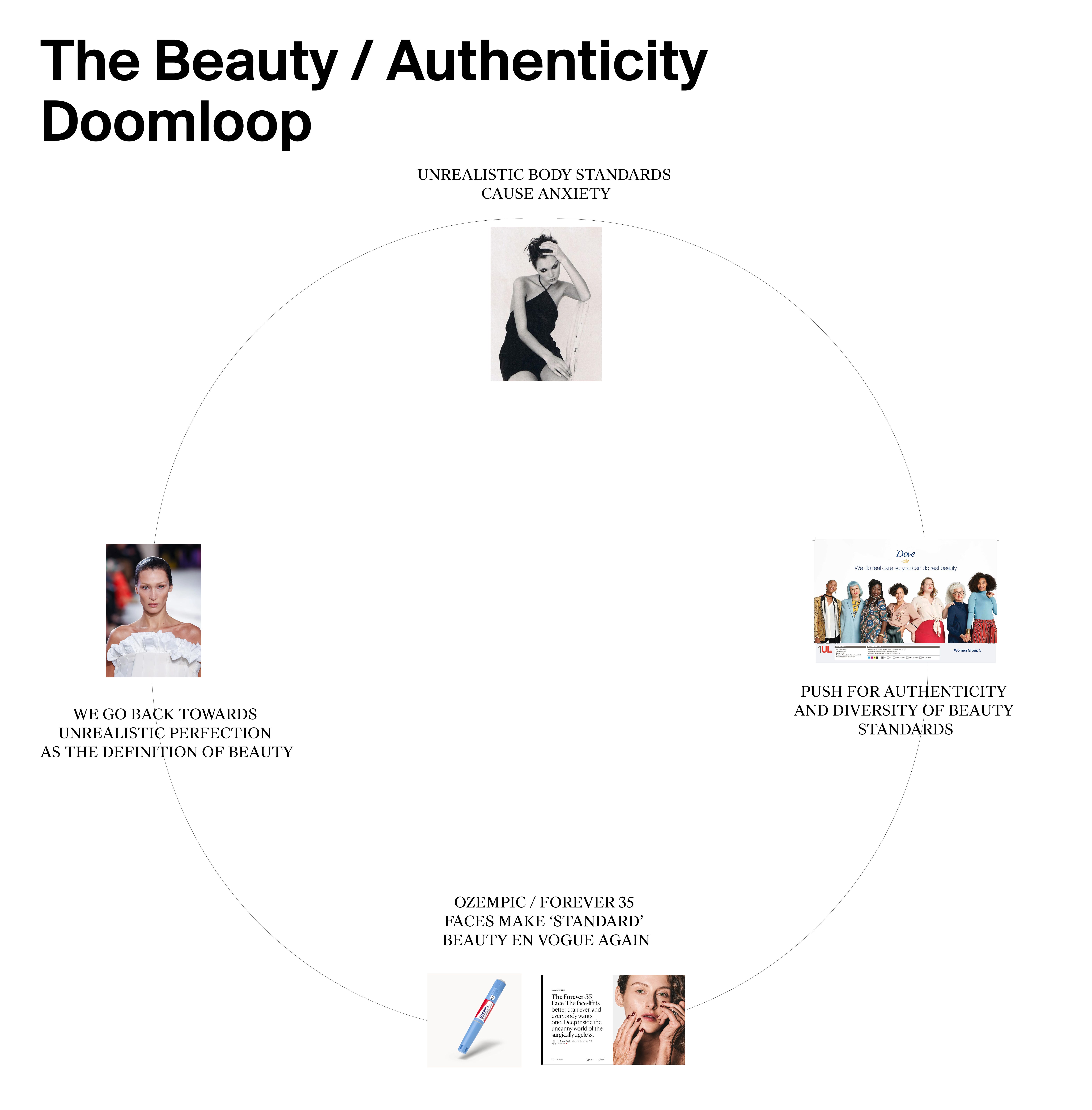
In response, a rumbling pressure emerged, spurring brands and corporations to acknowledge the value in being satisfied with oneself from the get-go. It didn’t take long for them to realize that there might actually be something to this idea that, just maybe, people aren’t always looking to change, but instead, looking to be affirmed.
Enter Dove’s Real Beauty campaign.
The stage was perfectly set. Here was a major personal care brand seemingly decoupling itself from the machinery of fomenting low self-esteem for financial gain.
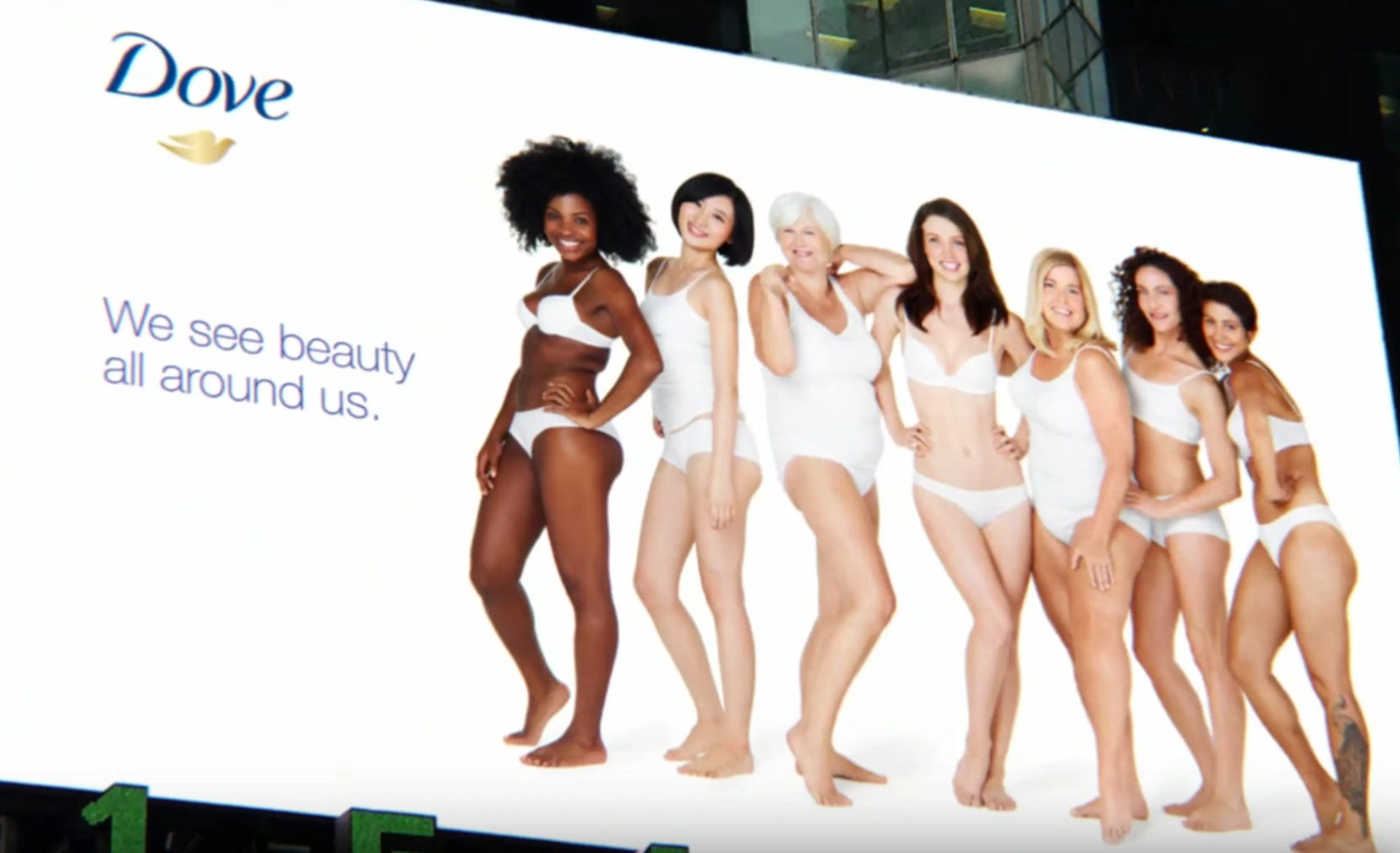
In retrospect, the concept seems almost trite: that you are beautiful, naturally, as you are.
But at the time, the campaign stood in incredible contrast to the status quo. And it was a wake up call. Suddenly, corporations knew they couldn’t keep profiting off of unrealistic beauty standards, at least not so flagrantly, and at least not to women.
So, from the fallout of the 90s and early 2000s obsession with objectification and aspiration, rose the hollow neoliberal phoenix telling you that you can be whoever you want to be… and that the newest probiotic soda company is totally down with that!
II. EXPRESS YOURSELF
If you could no longer tell people who to become, you could instead reflect who they already were (or at least who board rooms imagined them to be). The new prerogative of advertising was no longer about projecting an ideal, but about affirming a unique identity. Campaigns subsequently traded out the manicured and model-esque for carefully curated approximations of “real” or “authentic” people.
But as the cultural expectations placed on brands became more complex, the amount of attention available to communicate those ideas was rapidly shrinking. Brands yet again turned the chapter on a never ending story: say more with less time.
Advertising has always depended on simplification, but now brands were being asked to communicate the nuances inside identity and individuality — all within the constraints of a fifteen-second spot or a passing scroll. Complicated social signals needed to be instantly legible. This is all to say: advertisers needed a new kind of shorthand.
That shorthand manifested as an aestheticized individuality. It put us in a chokehold marked by a hodge-podge of eccentric but inoffensive visual quirks like dyed hair, ugly-cute clothing, and stick-and-poke tattoos. It was non-conformist, sure. But it was safe. It was the new millennium’s commercial debut in the style of “how do you do, fellow kids?”

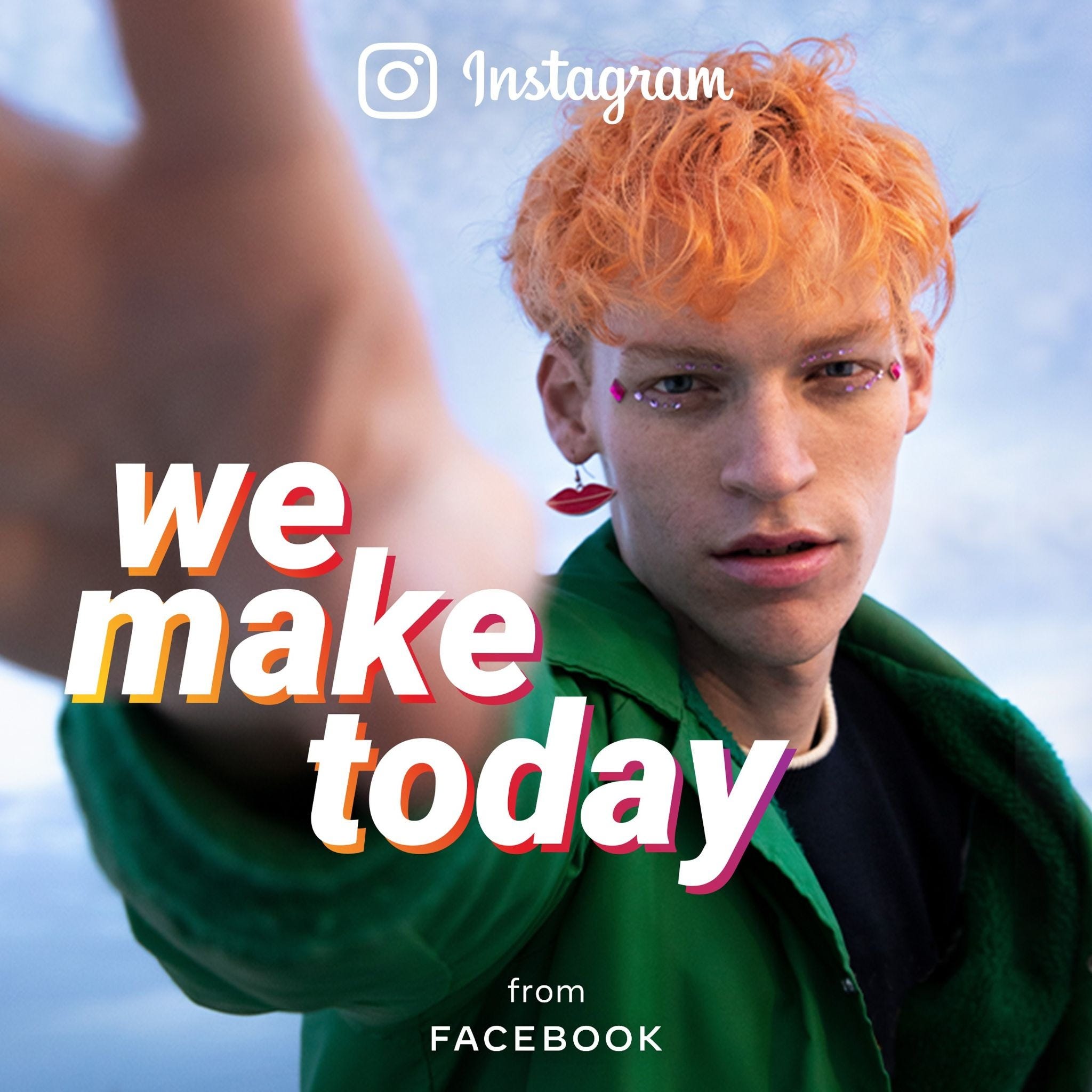
For a while, the goldmine of identity marketing seemed bountiful and infinite. Trend reports were optimistic, encouraging makeup brands to expect an influx of ‘even straight men’ gaining the social permission to dabble in concealer or foundation, at the very least.
Even if this era of identity and expression-based branding felt, in retrospect, like an overcorrection against the unreachable and uncomfortably binary beauty standards of the time…
Something was still lingering unresolved.
Although the surface narrative had changed, the basic commercial mechanism hadn’t disappeared. What was once marketed to us in the overt name of vanity, was now sheathed in a slightly more defensible skin of ‘self-care.’
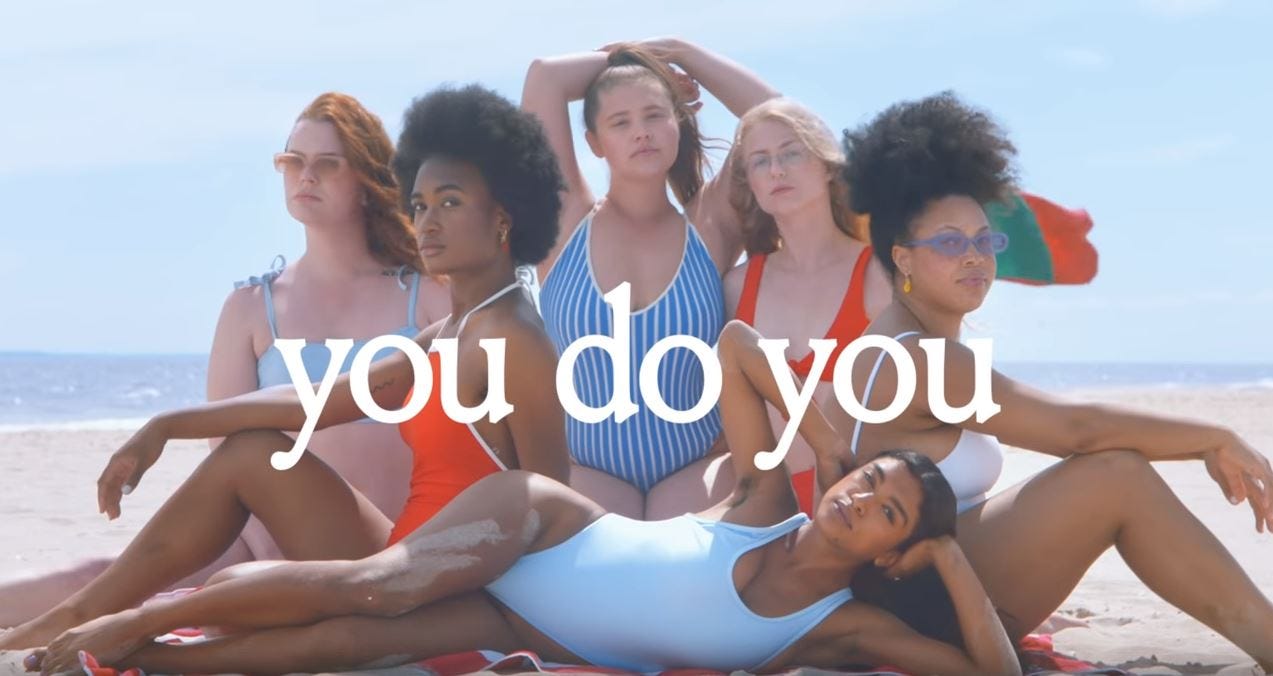
Still, laser hair removal (a procedure as painful as it sounds) has been on the rise since 2019. More Americans are dieting now as compared to a decade ago, plastic surgery is gaining popularity among younger and younger women, and Kim Kardashian is the face of a billion dollar shapewear company.
An ageless truth remained: from the corsets of yore to the extreme diets of today, from laser treatments to injectables, women have long been socialized into the idea that the body is a project that demands perennial upkeep, and, par for the course, suffering. And if there’s one thing businesses have known since the dawn of time, it’s that dissatisfaction with one’s situation is a business opportunity.
While there are more insidious ways to respond to human insecurity than others, wanting to look and feel your best isn’t inherently some moral affront to self respect. In fact, taking care of one’s appearance can very much be a practice of self respect. It can be a way to lift our spirits and do ourselves justice.
Dressing well is a form of good manners. — Tom Ford
When I design and wonder what the point is, I think of someone having a bad time in their life. Maybe they are sad and they wake up and put on something I have made and it makes them feel just a bit better. So, in that sense, fashion is a little help in the life of a person. — Miuccia Prada
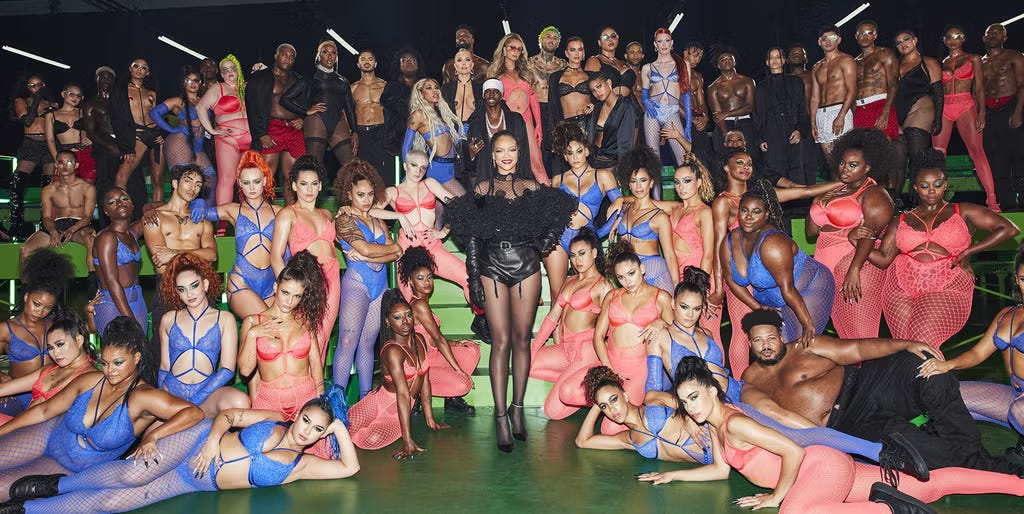
The trouble starts when the definition of what that looks like narrows. That’s why Sydney Sweeney Has Great Jeans was a flop (rightfully so), and Rihanna’s lingerie line fashion show became a multi-volume award-winning media series (again, rightfully so). It’s still lingerie. It’s still sexualizing. It’s just not prescriptive.
Of course, in the western world, aesthetic cultivation has often been coded as an especially feminine obligation. Even the emergence of dandyism in the 19th century as an identifier of a certain kind of man who had mastered “the discipline of social self-presentation and self-staging,” did little to dislodge this gendered notion. Dandyism, in all its meticulous grooming and sartorial excess, was often associated with queerness.
The last frontier of beautification it seemed, was the straight man.

Now, 8 years into this supposed renunciation of appearance as the premier commercial and interpersonal commodity, Clavicular is all over the headlines, marketing himself as the ultimate disciple of a little something called “looksmaxxing.”
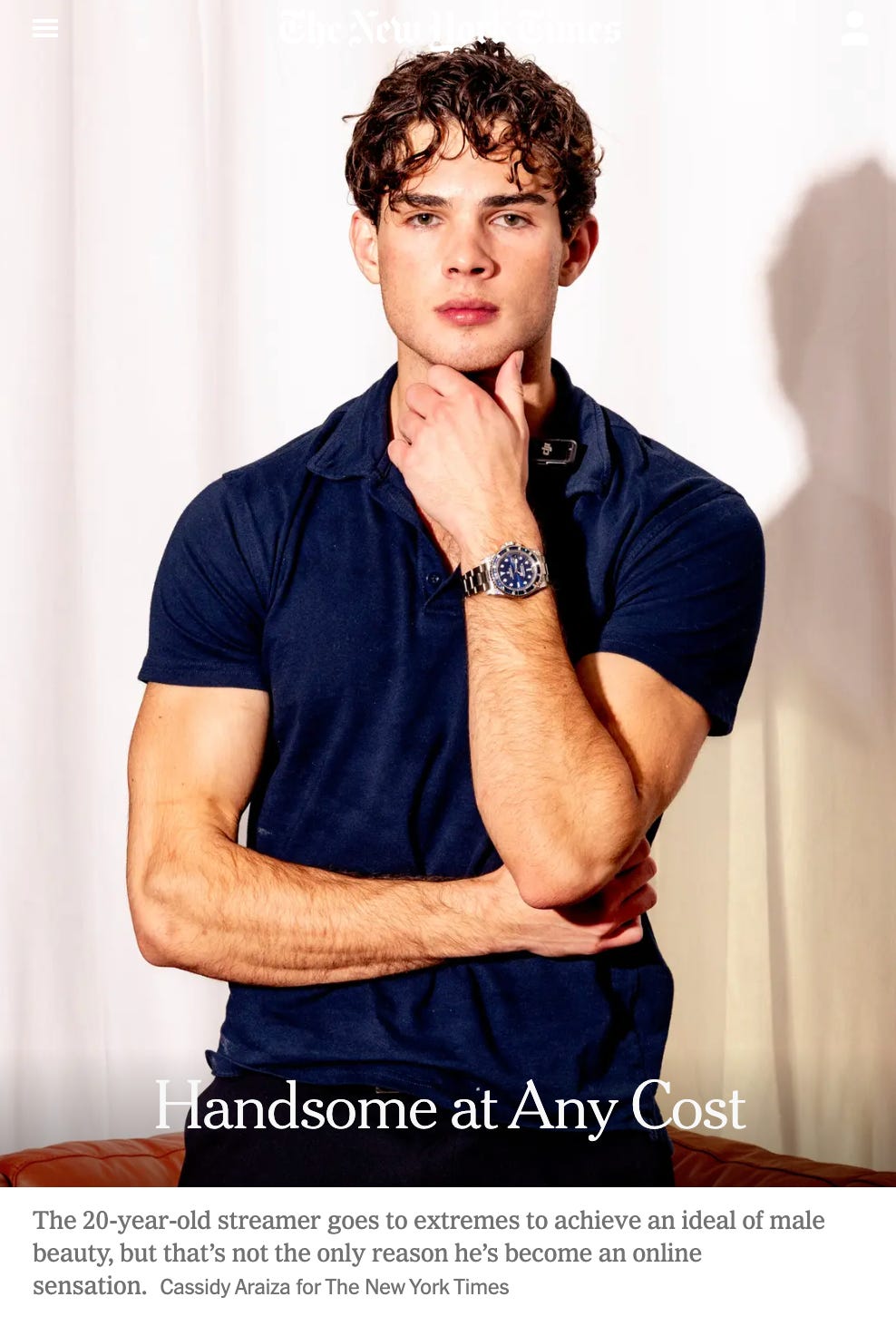
In spite of Clavicular as an almost Platonic embodiment of all ingredients necessary to become a cult of personality in our virality-fueled media landscape — he seems to have been in the right place at the right time.
Looksmaxxing feels like an inevitable male crisis response to an interconnected yet anti-social world. We know the kids are lonely, that we’re looking at our own reflections way too much for our own good. We also know that dating apps (a supposed antidote to an atomized and socially anxious generation) are calibrated to maximize revenue over genuine matches. A 2025 study out of Lancaster University’s Department of Health reveals a striking disparity in hetero dating app experiences:
Women report being inundated with so many matches that it is hard for them to make a decision on choosing someone to engage with properly. At the same time, men are on the opposite end of the spectrum, where they get very few responses and must purchase expensive, paid features and subscriptions, which allow them to get a limited amount of priority over nonpaying members.
The psychological fallout of that disparity has found a strange home online. On sites like Ommogle, streamers stage live "mog battles" — head-to-head appearance comparisons where strangers are ranked against each other in real time by audiences. It's dating app logic taken to its extreme and put on stage as entertainment.
And with the almost mystical persistence of manosphere-flavored content finding its way into the feeds of young men worldwide — this all starts to feel like the perfect storm for a social obsession with self-improvement.
But despite its black-pilled forum roots and the shock factor of terminology like “bonesmashing,” the looksmaxxing hysteria all smacks of something familiar.
Perhaps that age-old quip that women have known all too well: beauty is pain.
III. FOUR FUTURES
If businesses stay true to their track record of capitalizing on cultural wavelengths, we might be in for a good old spectacle of history repeating itself — or, perhaps, a spectacle like we’ve never seen before.
We put our heads together to imagine four potential futures that might transpire in the fugue of today’s looksmaxxing frenzy. Though not all equally favorable (by any means and as we hope you’ll agree…), we see traces of each of these potentialities in our current world. The following are speculative realities built on our observations of tendencies already unfolding around us — just taken to their extremes.
Future A: Nothingburger (or Just Another Dubai Chocolate)
While the ‘trend’ never takes hold as a commercial playbook, a quiet undercurrent keeps flowing: the reality that straight men have already been entering beauty culture quietly, but without wanting to admit it overtly.
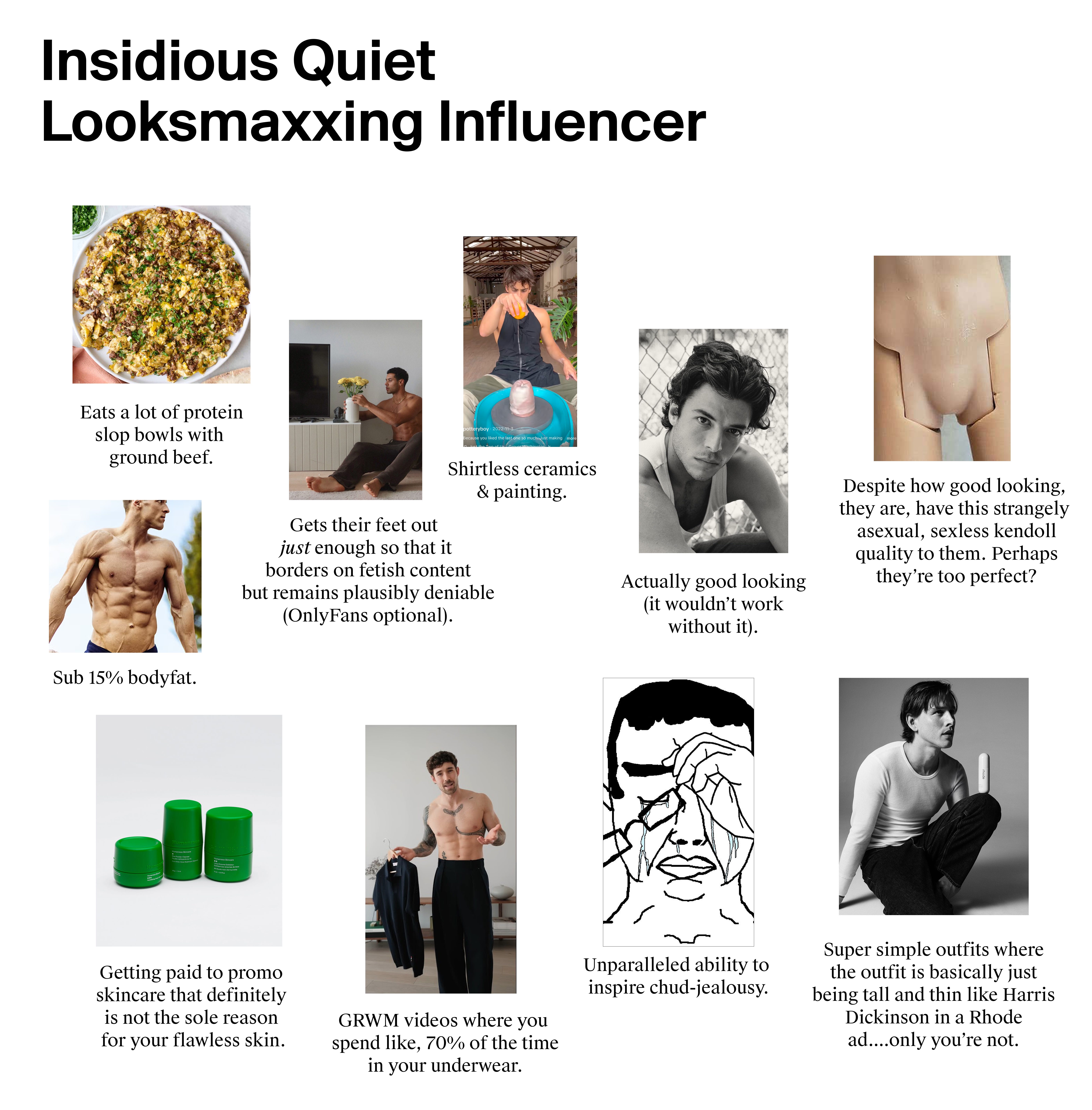
But as with all trends in the modern age, hype can come crashing down as quickly as it snowballs into existence in the first place — and so it may with looksmaxxing. In this future, it turns out to be all hype with no impact, just another trend in the trend factory like ‘butter yellow’ or Damn Daniel being back at it again with the white Vans.

Would-be looksmaxxers keep absorbing tidbits of personal care pointers primarily from their girlfriends or memes clowning on boys who use bar soap as face wash. Brands who get overzealous about the possibility of capitalizing on low straight male confidence will expose themselves as missing a true sense of self — and potentially expose themselves to a moral reckoning in the court of public opinion.
Future B: The Rise of the Brotox Industrial Complex
Somewhere, an app is already working on a feature to turn your phone into an always-on monitor for perfecting your personal appearance. Heightened awareness is fuel for an economic monster. In this future, there are billions to be made by inflating and expanding existing beautification markets, only now geared toward male “improvement.”
The markets are flipped with recycled yet blindingly burnished goods like makeup and shapewear — ݁₊ ⊹ . ݁but for men ݁₊ ⊹ . ݁!
Picture an entire industry born from the sudden acceptability of men optimizing and redefining their appearance beyond the gym, barber shop, or queueing up outside the flagship Kith location.
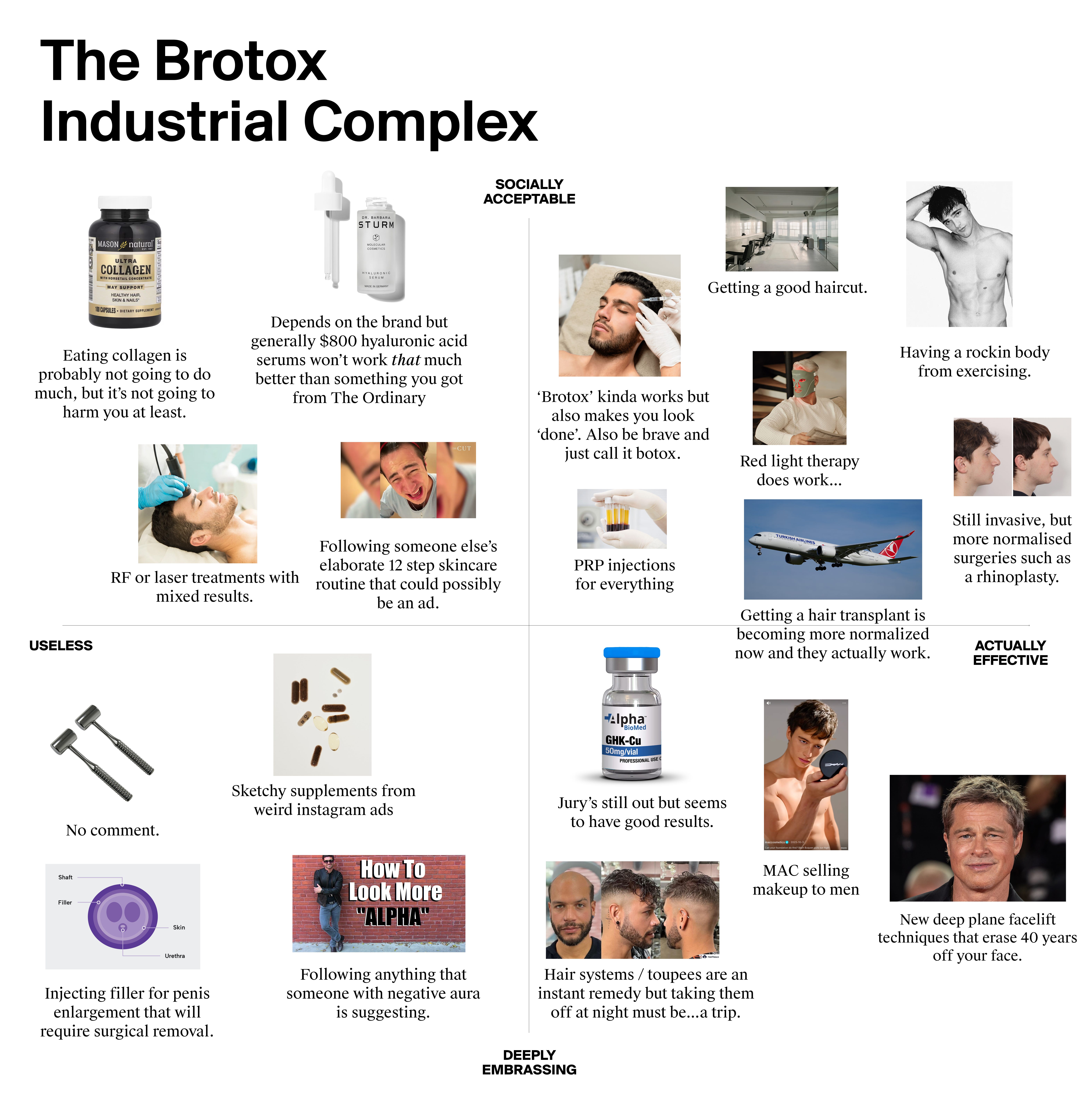
The key marker of this reality, if it does take after the arc of woman-oriented beauty & personal care, is the facade of health: aesthetic upgrades marketed to you not as just a beauty hack, but as good for you, too. Or conversely, not just good for you, but also a beauty hack.
So bros end up getting on this “I’m glowing up but for health reasons” tip as a way to preserve fragile egos in the pursuit of vanity.
Future C: The Great Face Card Divide
If this ends up being a nightmare we can’t wake up from, we might be in for a doomfest — a new class divide that’s no longer defined by access to luxury or scoring an internship at your dad’s law firm. Instead, it’s about how much of a baddie or a chad you are; the rest will follow. “You’re not ugly, they’re just rich” becomes a truism not just applicable in condemnation of the celebrity class, but the gen pop.
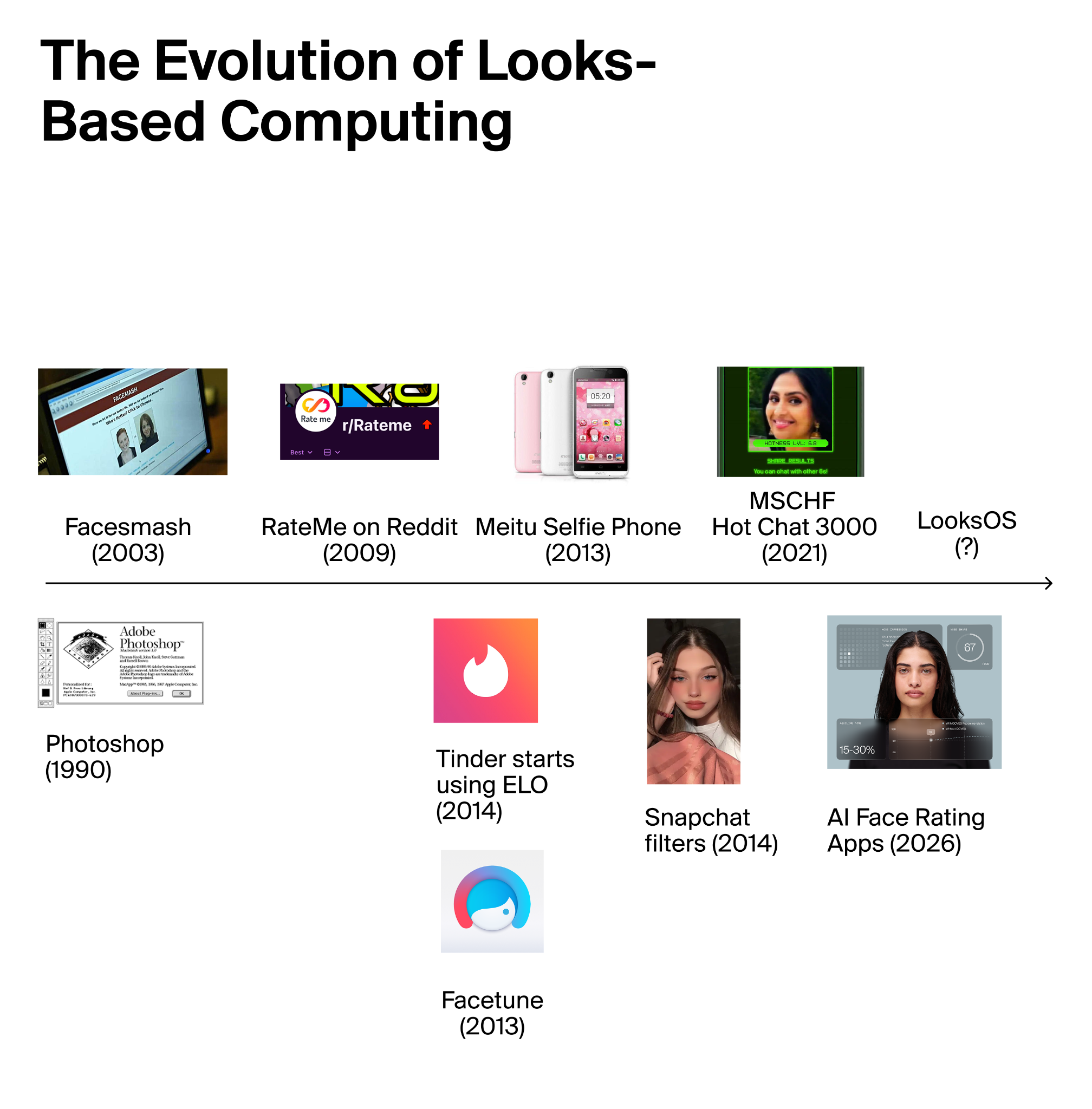
In the Great Face Card Divide, a dystopian industry of looks-based computing emerges in applications such as dating apps, where our ability to take action is regulated based on our physical appearance. Perhaps, our phones have evolved in ways where “monitoring the situation” is no longer a choice, but a requirement — the situation being ourselves.
Nike becomes known less for Dunks and more for their subtle shoe-lift technology. Equinox equips every major location with vending machines purveying DIY injectables for that extra post-pump glow.
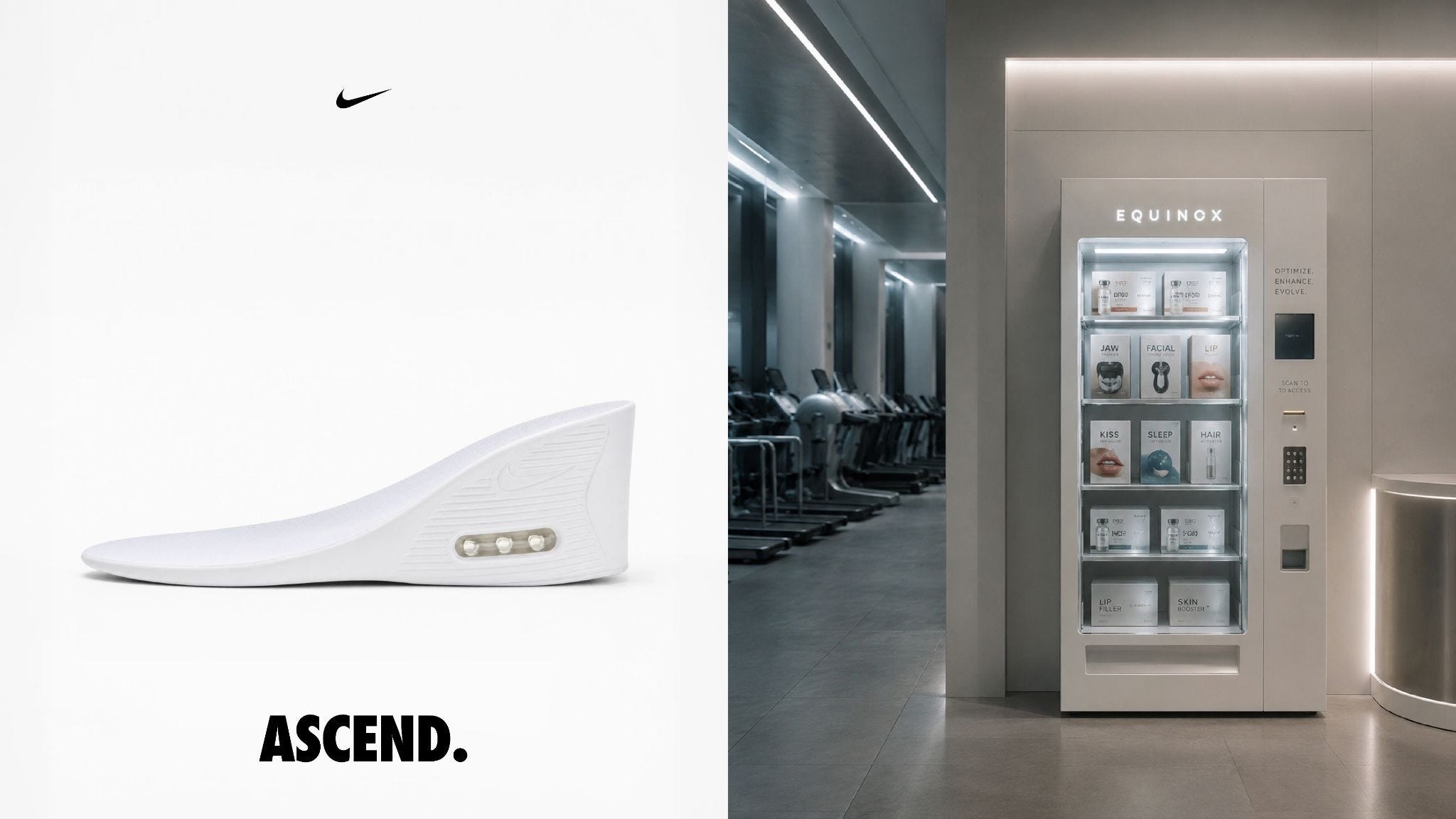
The American Dream is reborn, not in the way of a white picket fence and a good retirement, but in that enticing promise that anyone can, at least somewhat, “ascend.”
D. Anti-Optimization Counterculture
As a result of Futures B or C, or perhaps before we even get there, the populace will rise up in a total rejection of “ascending” per the standards of conventional beauty. We’ll see a return of fashion styles that lean intentionally into ugliness, disorder, or shock value: maybe punk and grunge return with a vengeance.
Or maybe it’s uncategorizable fashion, so post-post-irony-post-camp-post-core that they are once again fully earnest and authentic, precisely because of their resistance to categorization.
Based is the new baddie.
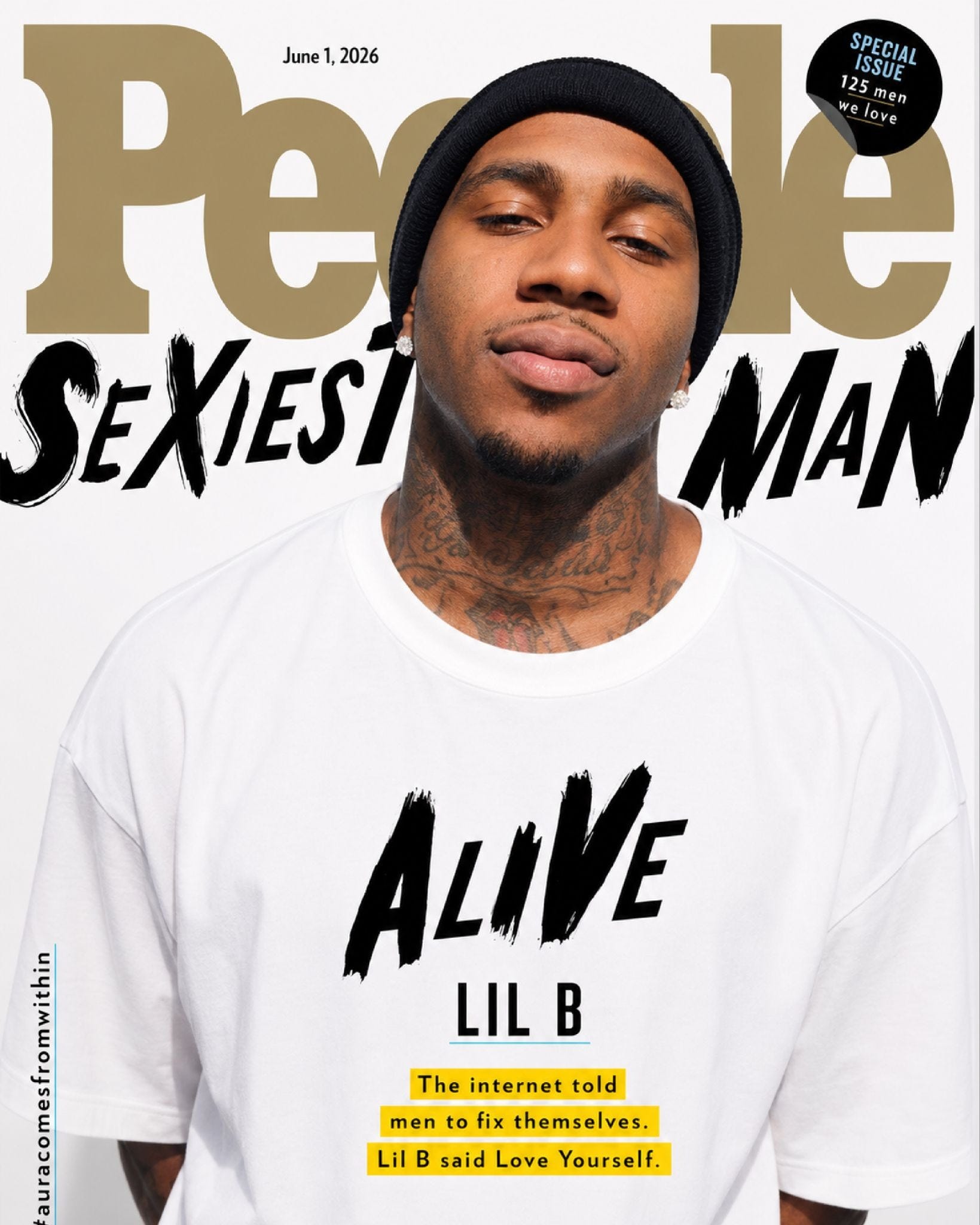
Anti-Looksmaxxing rises to the fore, orthodontists are scrambling left and right to counter declining interest in braces and cosmetic dental surgeries. Aging celebrities who never got work done become the new hot commodity in campaigns and on runways — an open-handed embrace of mortality and the flawed human condition become the hallmark of this future.
Not so bad, if you ask us.
IV. WHAT NOW?
So what’ll it be? Some futures are undoubtedly more appealing than others. We certainly wouldn’t want to live through them all.
Have we found ourselves right back in a moment where a narrow and aspirational ideal of ‘hotness’ dominates commercial media and consumer products? A world where surface-level signifiers take reigning precedence over all else? Where aesthetics are detached from — rather than infused with — meaning, authenticity, and substance?
We certainly hope not.
But from our vantage point, it seems like we might soon be in need of a Real Beauty campaign for the boys.
Thanks for reading
Findings is a project by Mouthwash Studio, a design studio centered on new ideas and defining experiences. Learn more about what we’re doing with Findings here. In the archive, you’ll find all our work to date surrounding this project.
This publication is 100% free and is supported by your time and appreciation. If you liked reading this, please share it with somebody who you think might also enjoy it.
Is there something we should cover? Respond to this email or send us a message at findings@mouthwash.co to get in touch.
Dove Men "Real Strength" campaign loading...
wow didn’t know anything about looksmaxxing and i’m just shocked how delayed we are as a society and individuals.