

Findings is a monthly newsletter on the influences and trends that are quietly shaping our culture by Mouthwash Studio. This post may be too long for email, read online for the best experience.
If this was forwarded to you, consider subscribing for future posts.
This issue of Findings explores the tumultuous conversations surrounding data centers and questions the role of architecture in their existence. This piece was developed in collaboration with CGI-artists Felina Hernández del Barrio and Yuri Rodríguez, who assisted in concepting and visualizing this train of thought.
The writing is a response to this post from a creator, which kicked off this research journey for us.
I. The View From Above
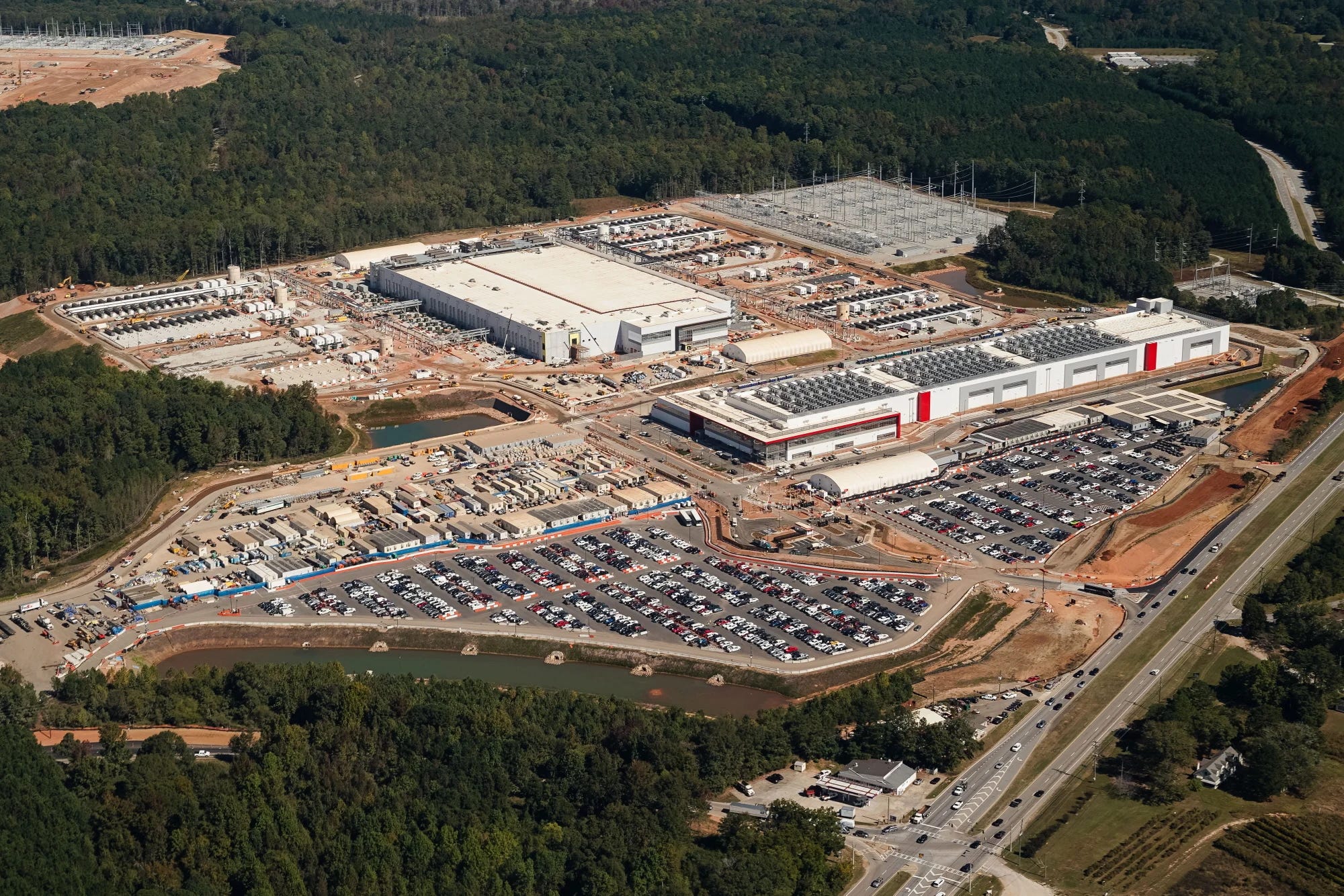
Data centers are this generation’s coal mine.
The proliferation of coal mines sparked by the Industrial Revolution was of course followed by economic and technological advancement, but it also came at a cost that we are still paying today. Data centers are proving to be on a similar trajectory.

The boogeyman buzzword of our time, “AI,” isn’t the enemy in itself. The technology has proven its value, from catching diagnoses before doctors might, to enhancing language learning in classrooms at a time when students are falling behind and educators need all the help they can get.
For people like us, AI can help product proof of concept—allowing clients to visualize ideas and understand the value of hiring real talent to bring creative visions to life. In a recent MW.S project, Grow Old Not Boring, AI image generation played a crucial role in getting clients on board to tell a story about real people with real passions, made possible by a team of best-in-class copywriters, designers, casting directors, art directors, cinematographers, stylists and more.

The promise of AI feels clear when it enriches our health, expands our abilities, or deepens our creativity. But when it starts to strain the conditions for a healthy, meaningful life on Earth, it becomes a cause for concern. Hence, the rapid surge of data center development across the continental U.S. (and beyond) gives us a real reason to pause.
The signature pain points of these data centers are unmistakable: immense natural resource consumption, severe noise pollution, and invasive nighttime light-bleed. Not to mention atmospheric and environmental pollution—Colossus, xAI’s supercomputer used to train Grok outside of Memphis, is currently facing a lawsuit for running operations on 35 unlicensed methane gas turbines.
And those are just the direct costs.
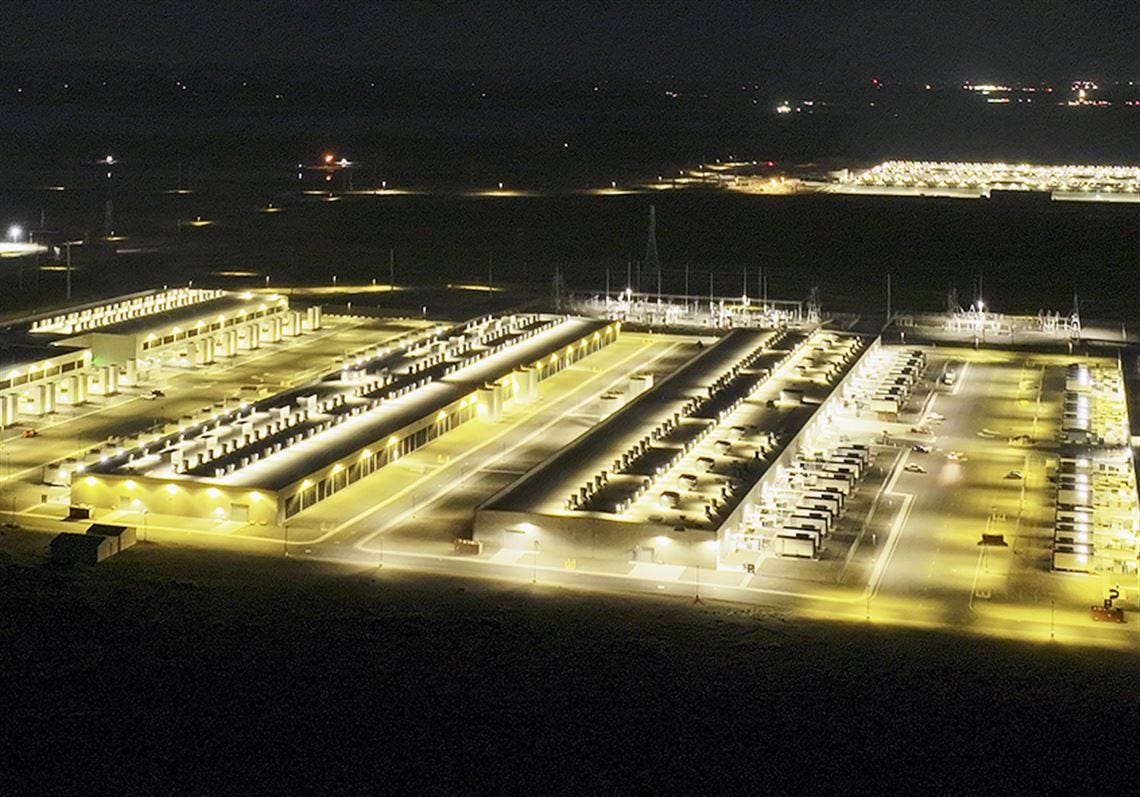
Utility companies are torpedoing their renewable energy goals in favor of keeping up with the energy demands these centers require. Ironically as a result, the lives of natural gas refineries and coal mines are being extended to accommodate these needs. This has resulted in a national average increase on consumer utility bills by 27% over the last six years. We can also assume that there will be billions of dollars of healthcare costs that long-term exposure to contaminated air and water will result in.
The conversation is accelerating at both national and local levels. In Congress, Democratic progressives are pushing for a nationwide moratorium on data center development. At the same time, many in our government are looking for developmental incentivization, citing the scaling of our domestic infrastructure as a necessary step in securing the future of our national security.
While our government is busy arguing with itself, the tech industry’s hyperscalers are moving right now—spreading their roots and sphere of influence into small, mostly rural communities.
Certainly our preference would be to leave our communities, farmland and natural landscape unscathed from the scourge of data center sprawl. But as hyperscalers are moving at lightning speeds, with little reason to believe they’ll slow down…
We couldn’t help but question — if they must be built — how might they be built better? What if data centers were less imposing? Less sensorially destructive? Less ugly?
Overconsumption of natural resources, lack of consideration towards local wildlife, and harmful byproducts pumped into our air aren’t moral preconditions for these data centers. They’re design flaws.
And those bearing the cost of these flaws are far removed from the people helming the expansion of this infrastructure—many of whom already live with the enduring reality of taking the hit for someone else’s gain.
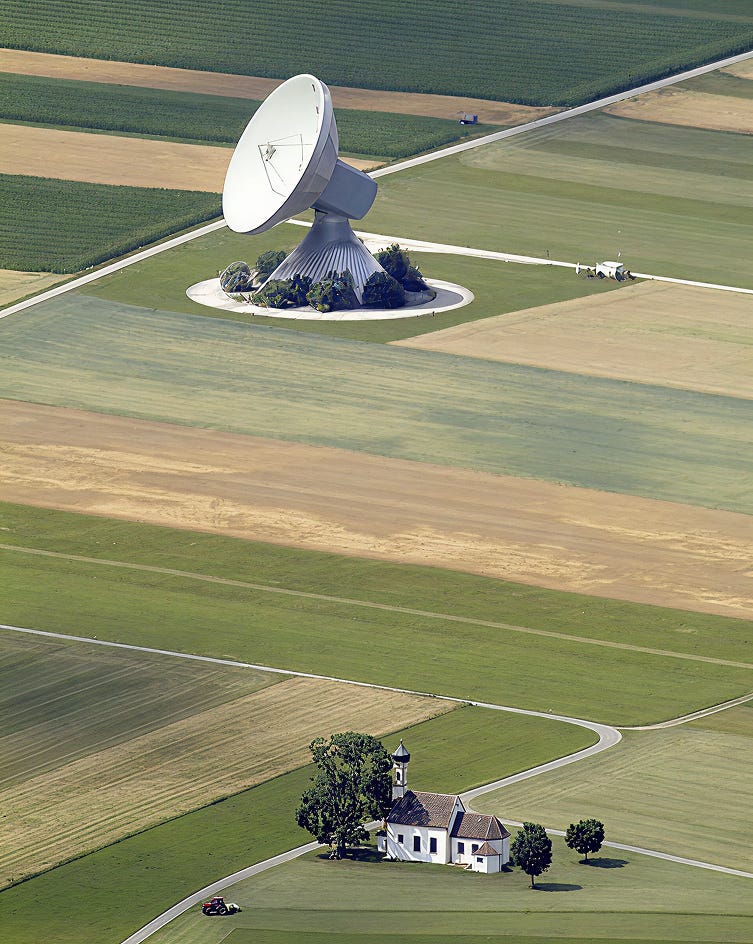
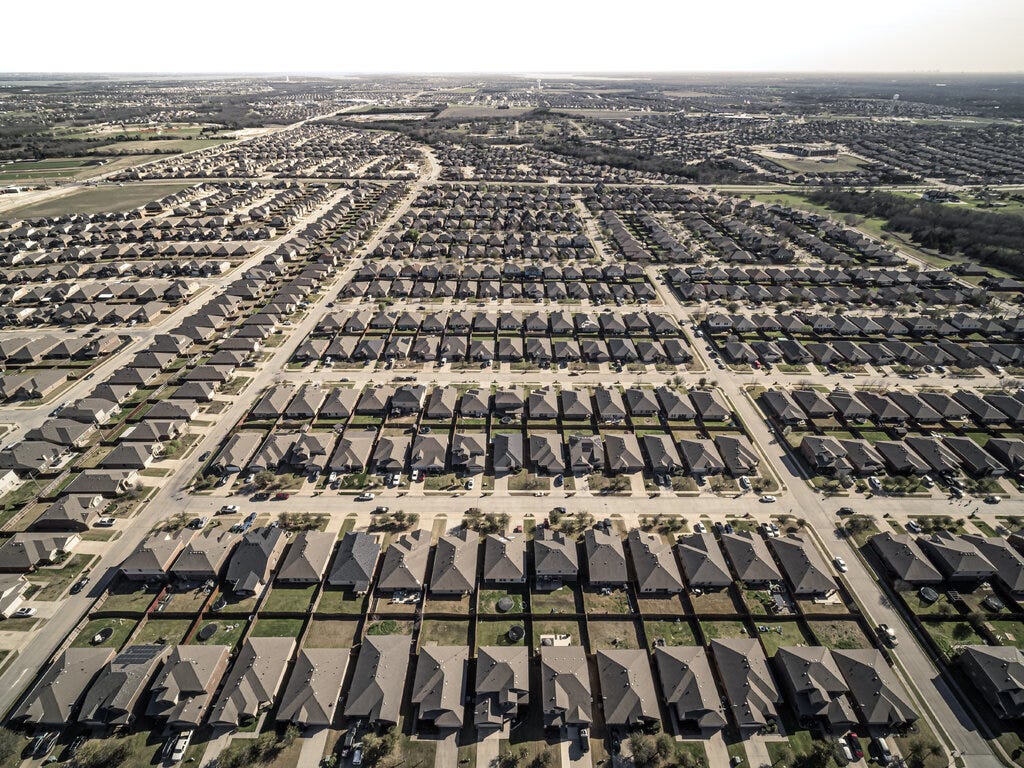
Beauty and function aren’t antithetical. Marina Bolotnikova recently wrote on how ugliness has more to do with the housing crisis than we think. Her line of inquiry dives into the NIMBY tendency to support housing development, but not in one’s own neighborhood. The article cites a survey revealing that this tendency seems to be rooted in the concern about aesthetic harmony—people are willing support the construction of apartment buildings if located near buildings that are similar in scale, not so much if located alongside single-family houses.
Framed another way, it doesn’t matter if we build the four-plus million homes we need to remedy the housing crisis if people find them so ugly they’re unwilling to live in them.
If the agenda of these hyperscalers is to build, build, build at any expense, then making these data centers beautiful might just be in their best interest.
We see this as a unique opportunity for these companies to partner with forward-thinking architects, innovative engineers, and conceptual artists to champion design solutions in the name of equity, sustainability, and harm reduction. The hyperscalers that lean into this narrative might even gain a competitive edge over their competition for simply doing the right thing, as fucked up as that sounds today.
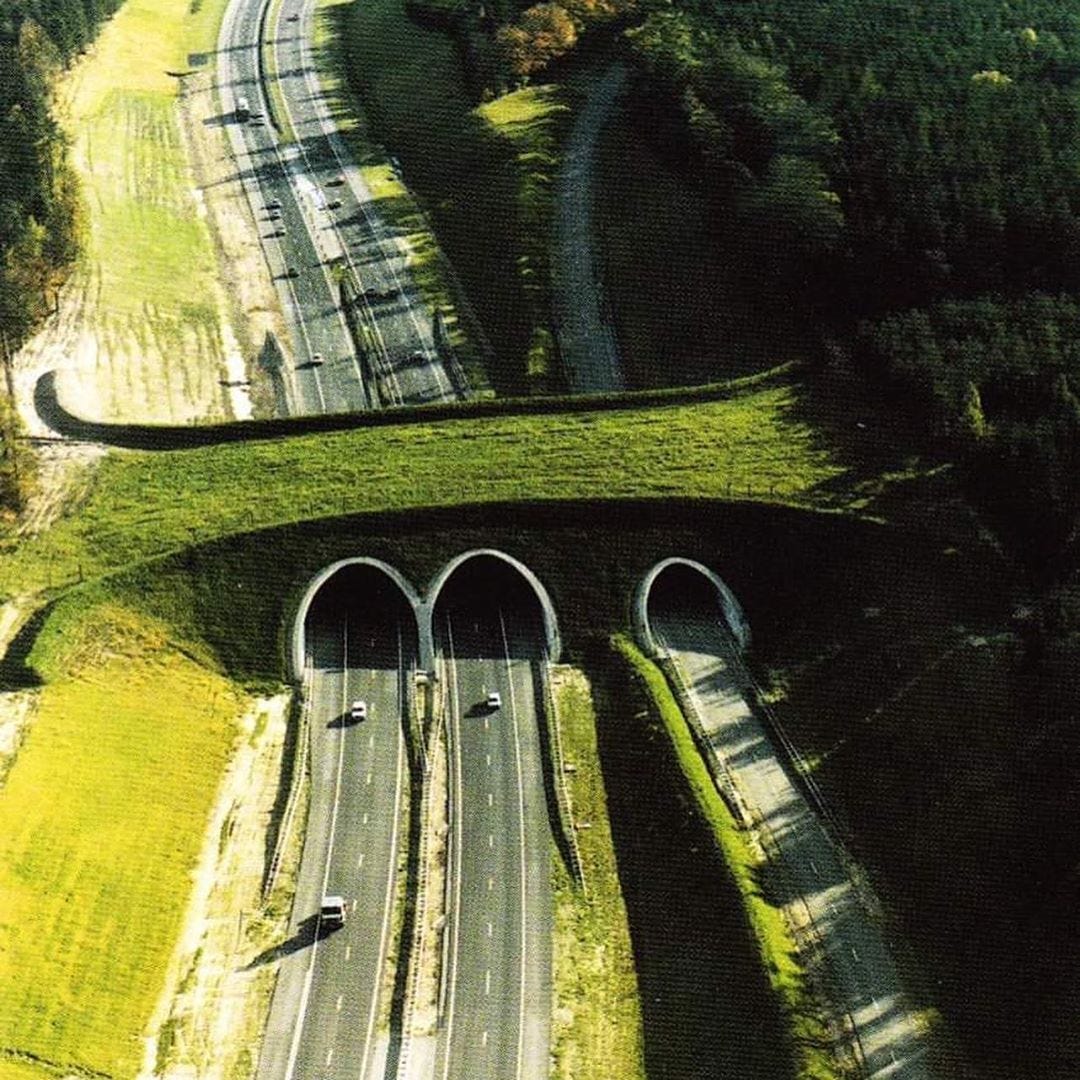
II. Today, infrastructure. Tomorrow, architecture?
Now the call for beauty, aesthetics, and function in our infrastructure is anything but new. Movements such as Bauhaus or Solarpunk have long-since offered clear philosophies on how these buildings, facilities and services should be designed to operate. Hassan Fathy, a renowned Egyptian architect who reestablished the use of adobe and mud construction, frames the objective clearly:
Architecture without philosophy would become engineering. Architecture without aesthetics is engineering.
Even halfway around the world, it’s hard not to wonder if our infrastructure in Death Valley, California could look like this:
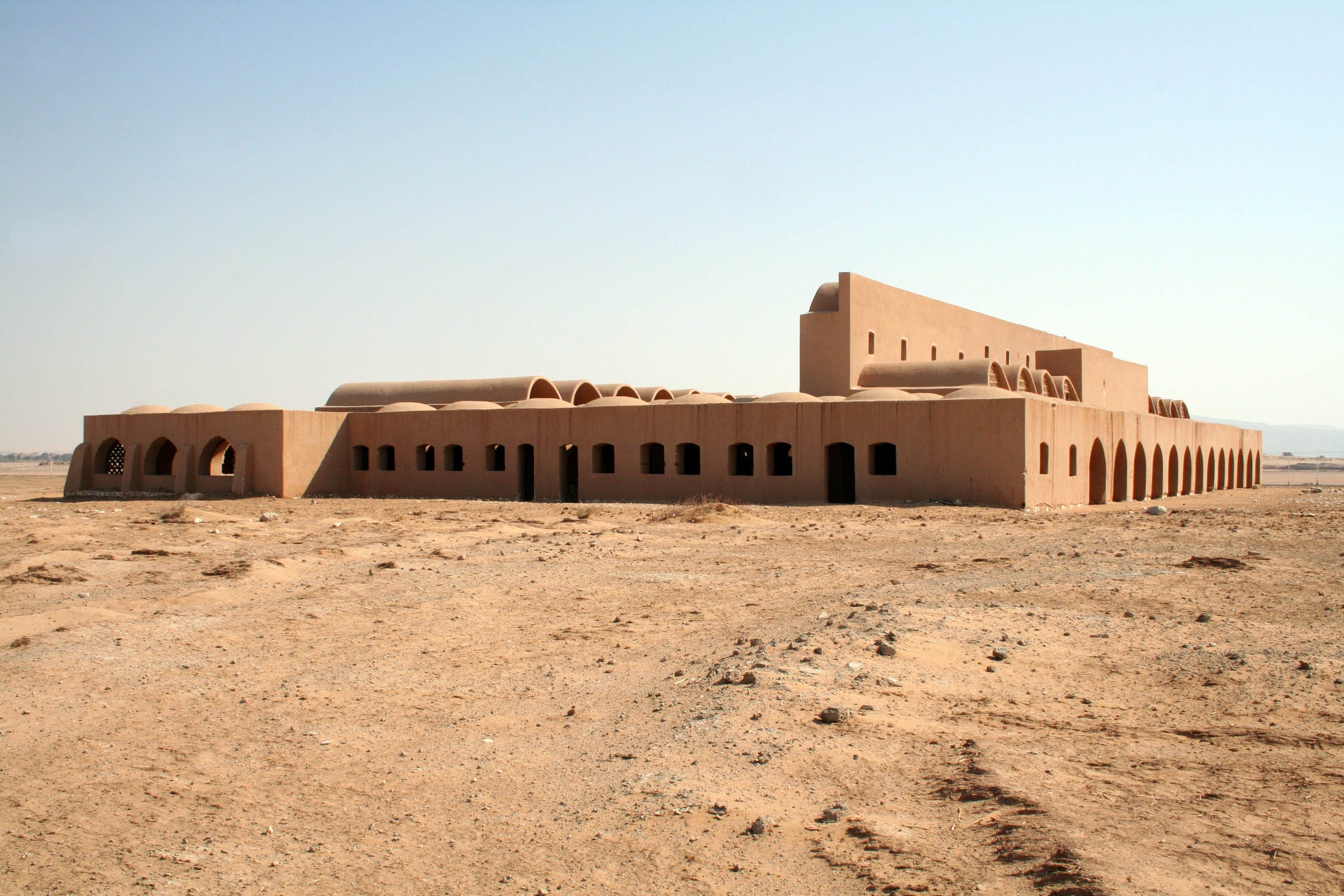
Speculation is always the first step in imagining better realities for tomorrow.
We pulled in CGI-artists Felina Hernández del Barrio and Yuri Rodríguez to assist in concepting and visualizing a future of more ethically designed data centers. These images, constructed with custom-coded CGI, rendering technology, and AI image generation create a vision of a better and more harmonious world.
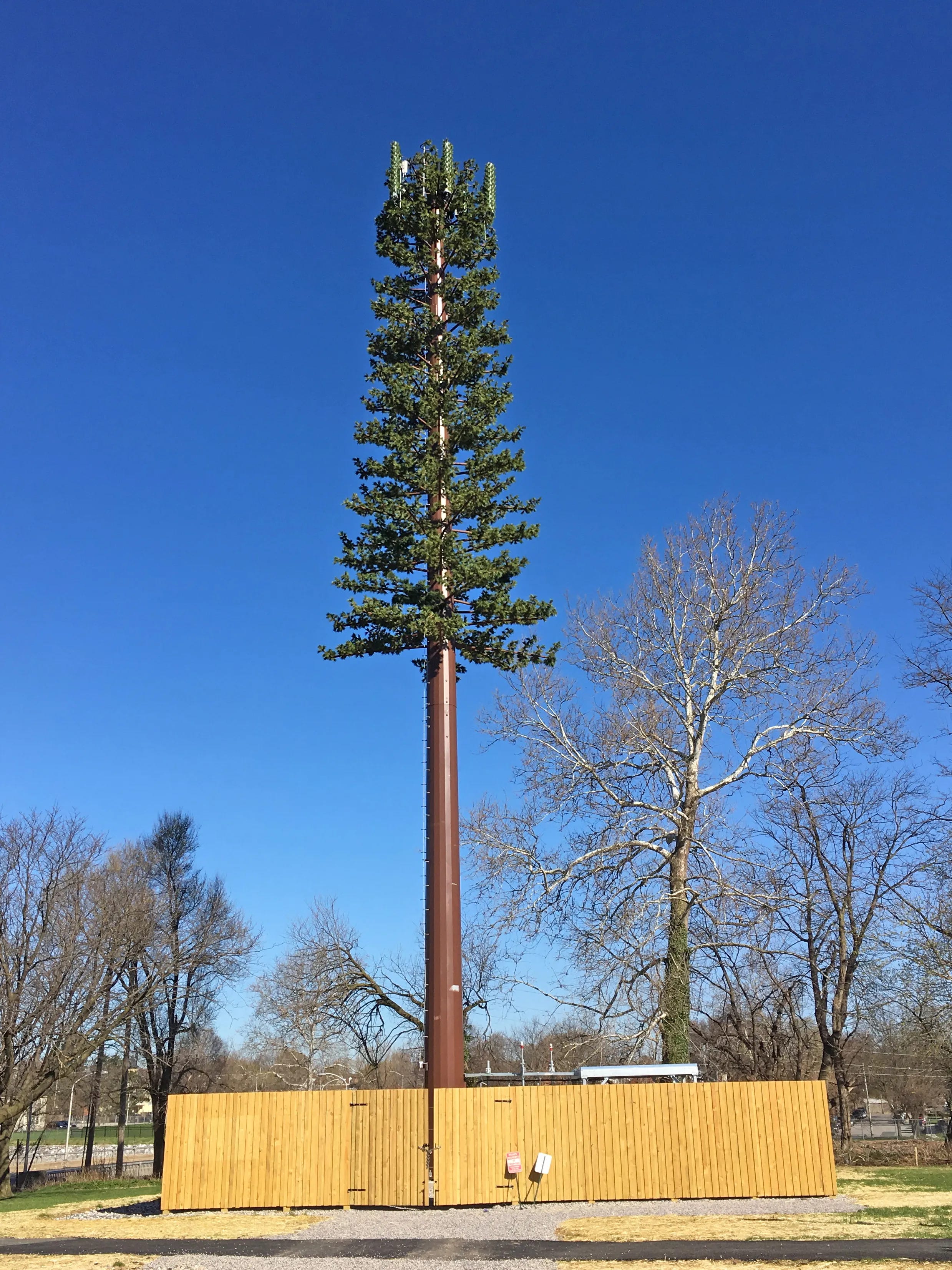
Instead of monolithic white boxes that span the length of entire highway exits, we can look towards architectural camouflage as a possible solution, designing these buildings to blend into the natural world around us, rather than stand out.
Beyond their visual impact, these data centers also generate constant noise, contributing to an ambient psychological strain on nearby communities. Silence could be our solution here, both as a material and a visual design language. At the same time, the immense water demands of these facilities call for more efficient cooling strategies, especially in the already water-scarce regions these structures tend to inhabit.
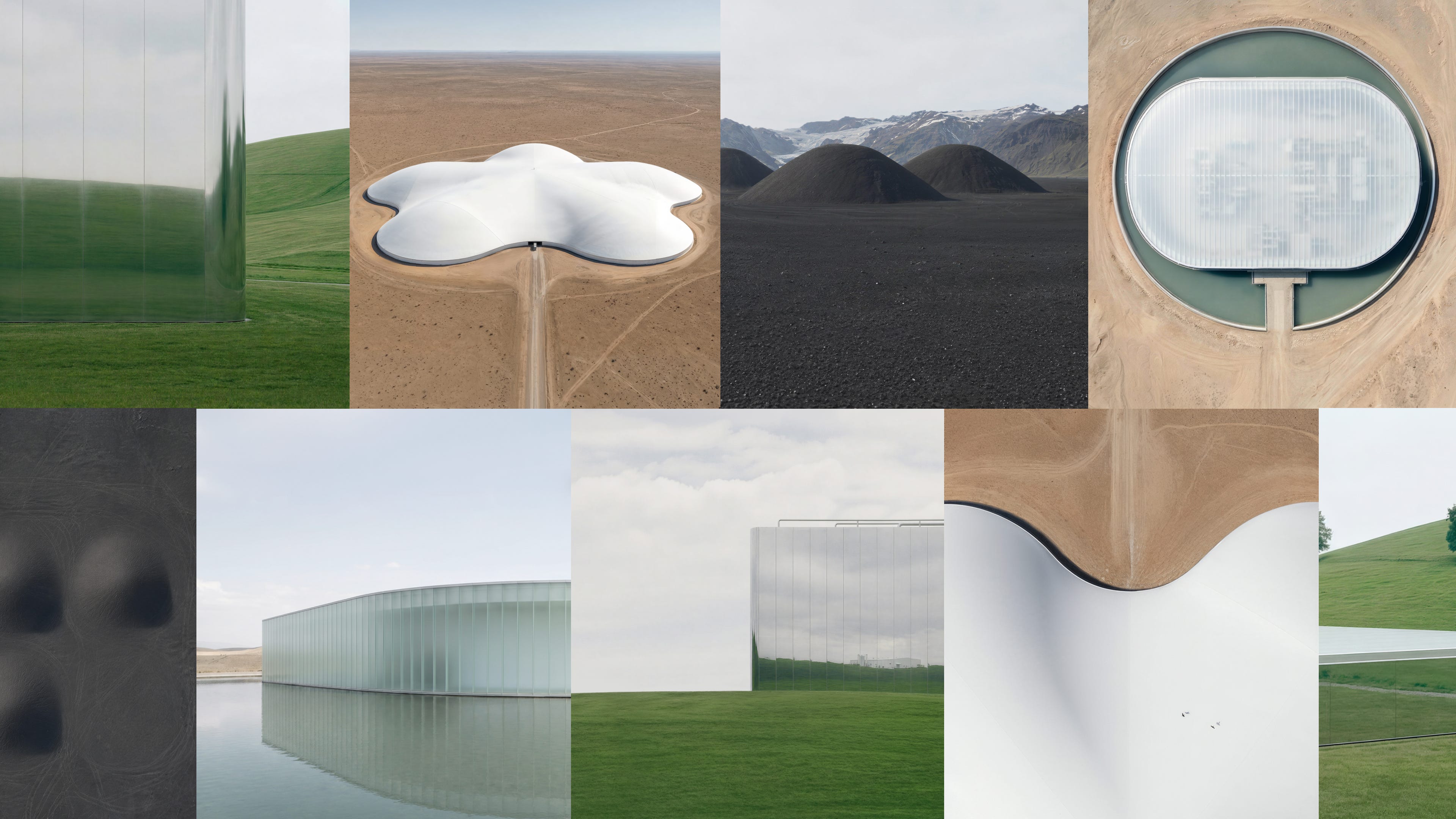
In the following speculative proposals, data centers are reimagined through organic architectural camouflage, sound-dampening systems, and water-cooling facilities to soften their presence rather than amplify it:
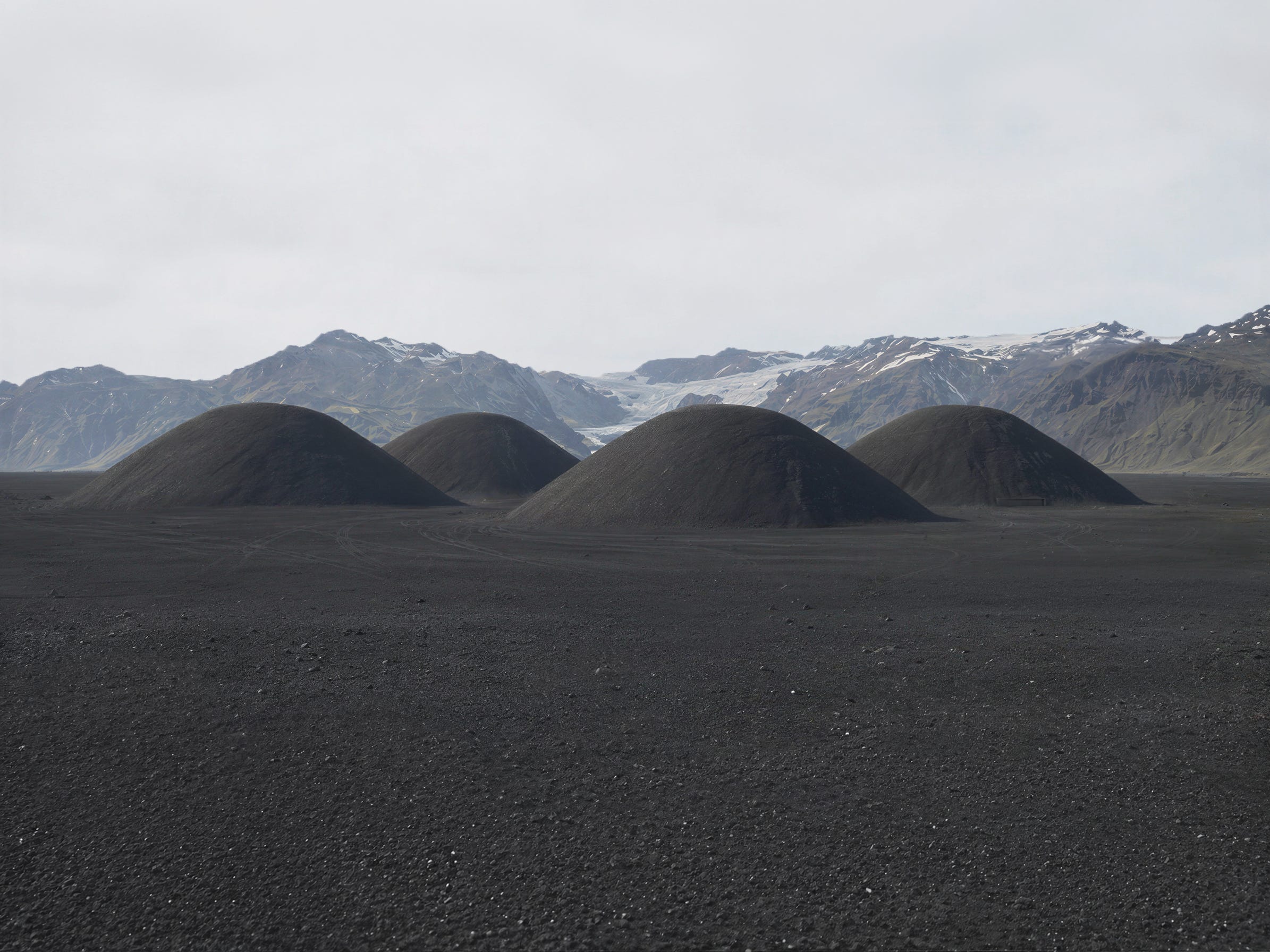
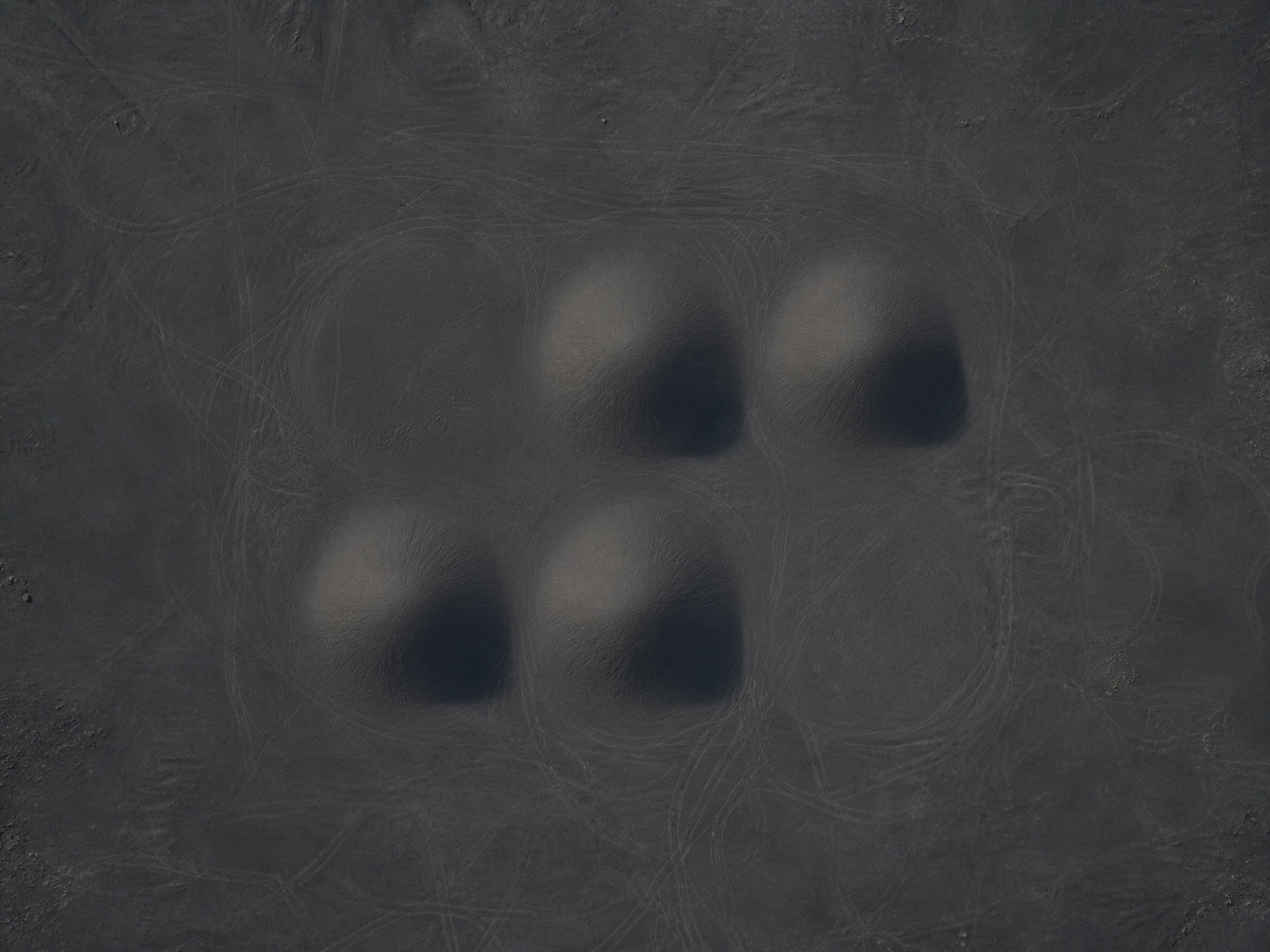
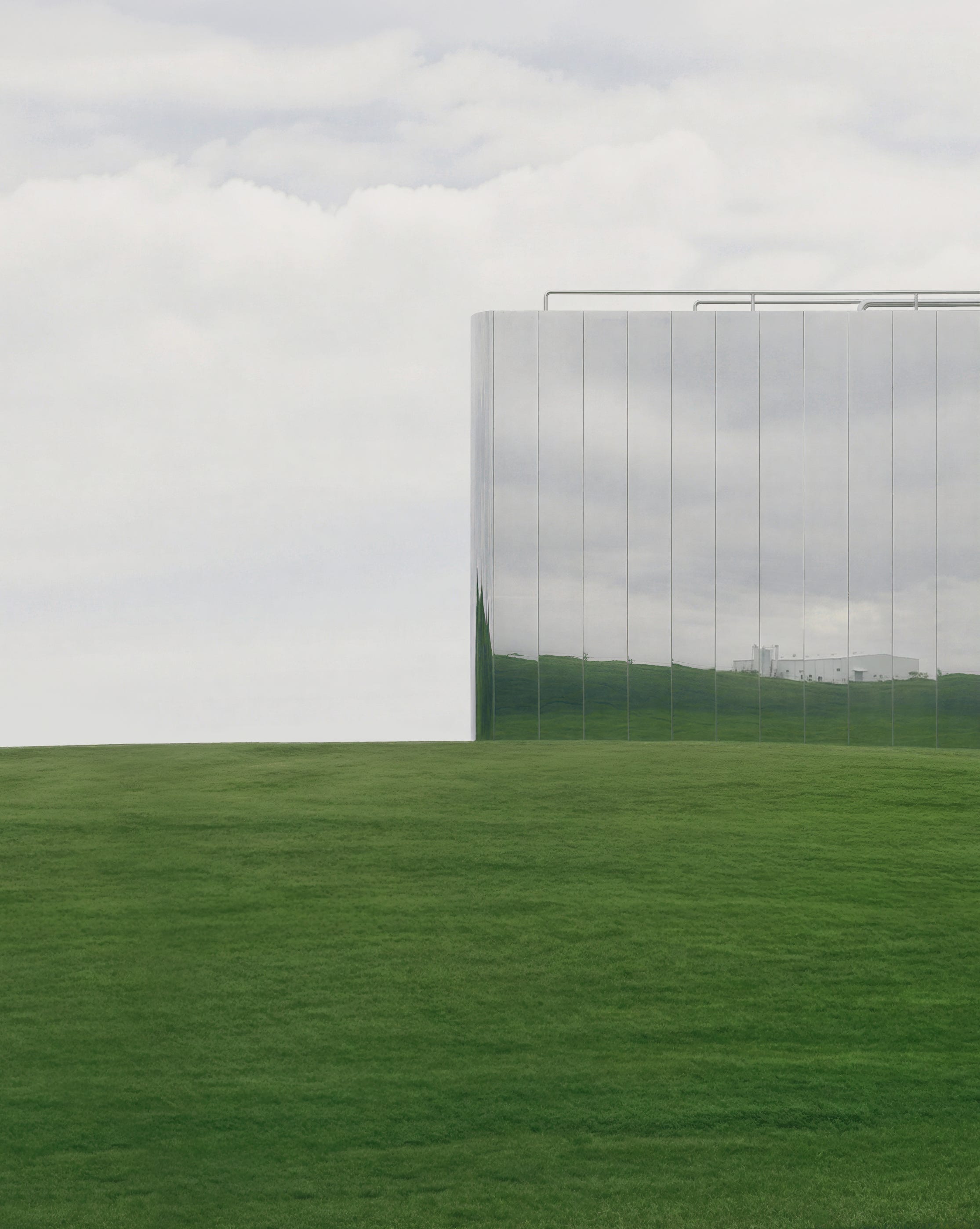
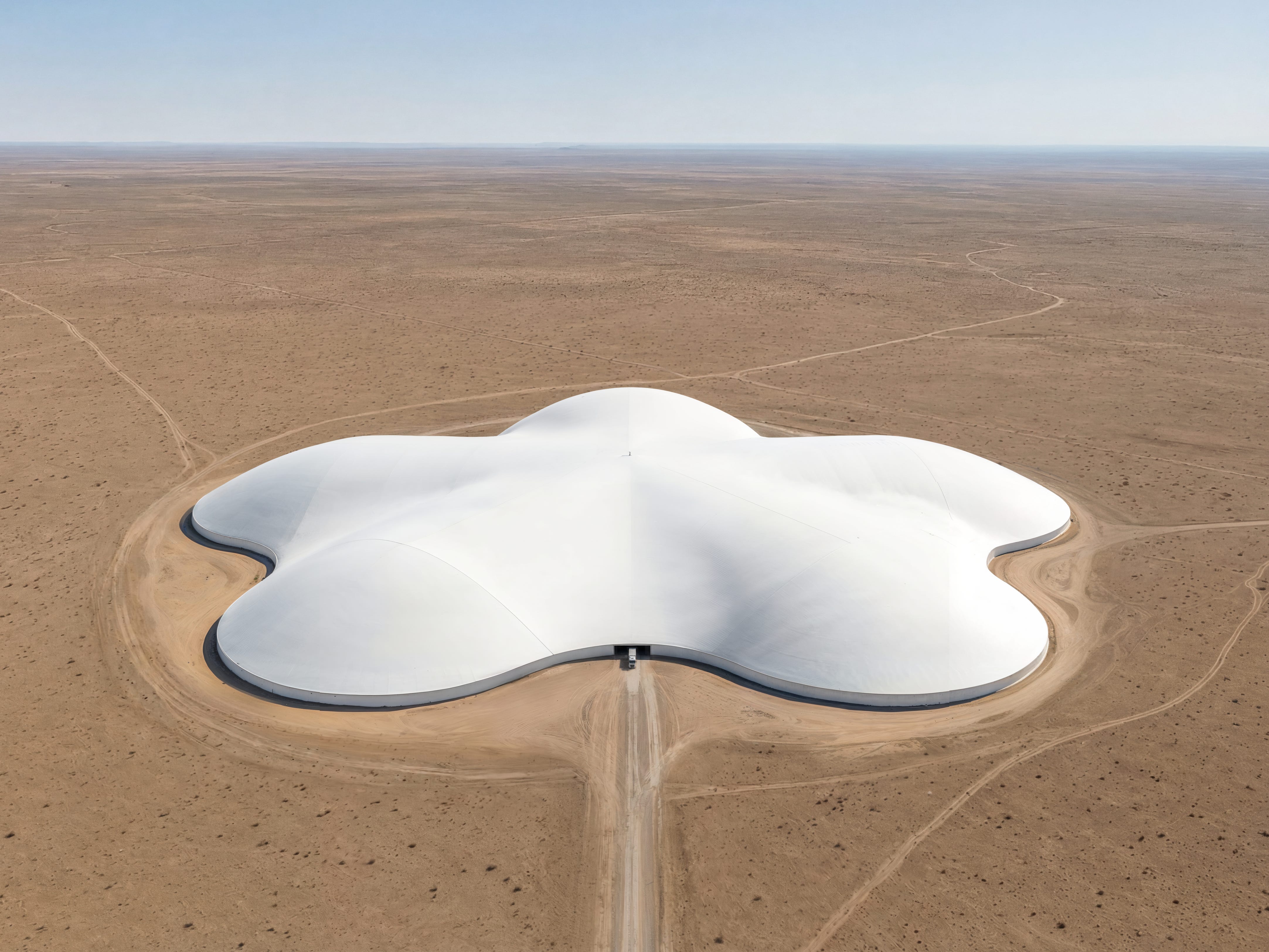
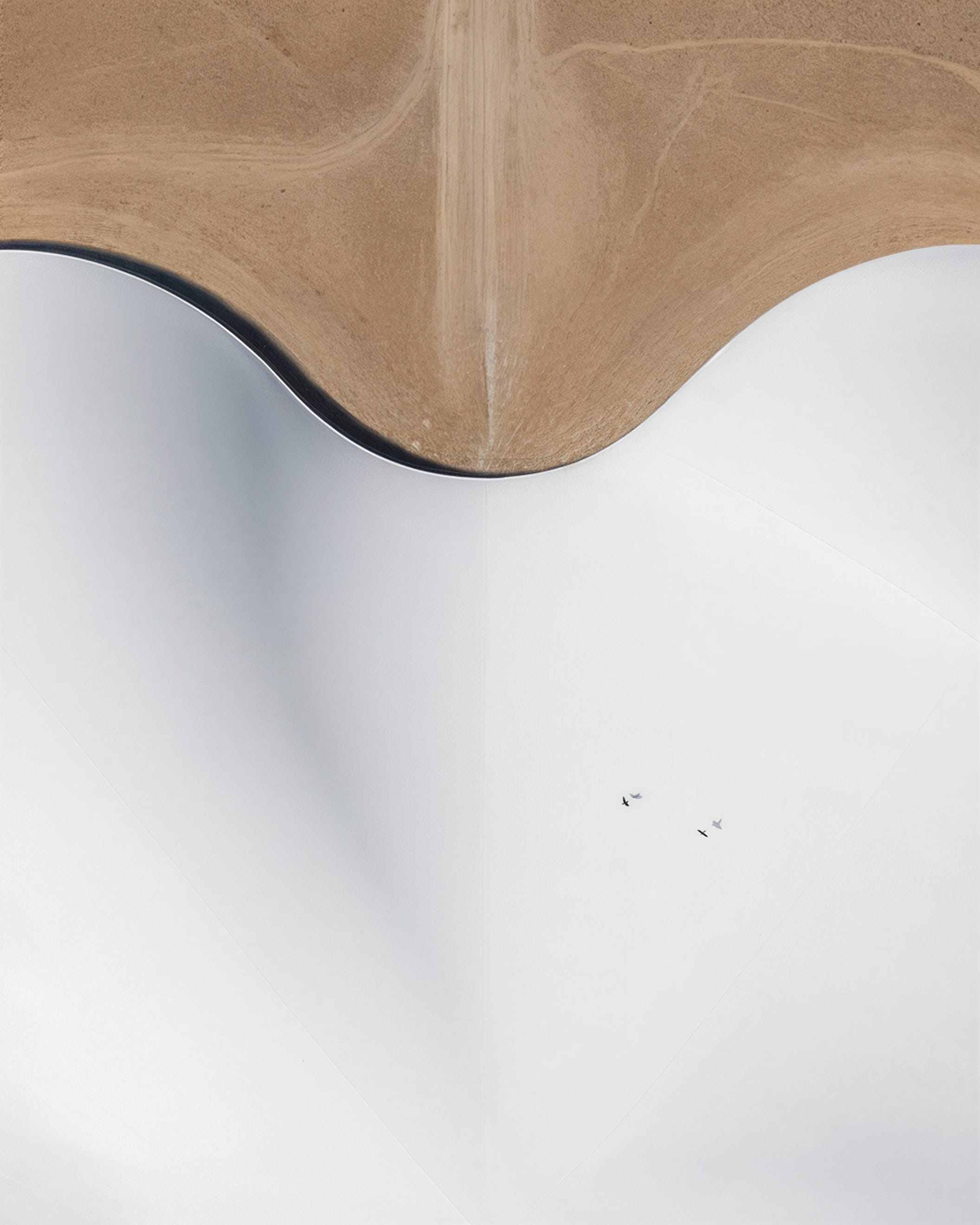
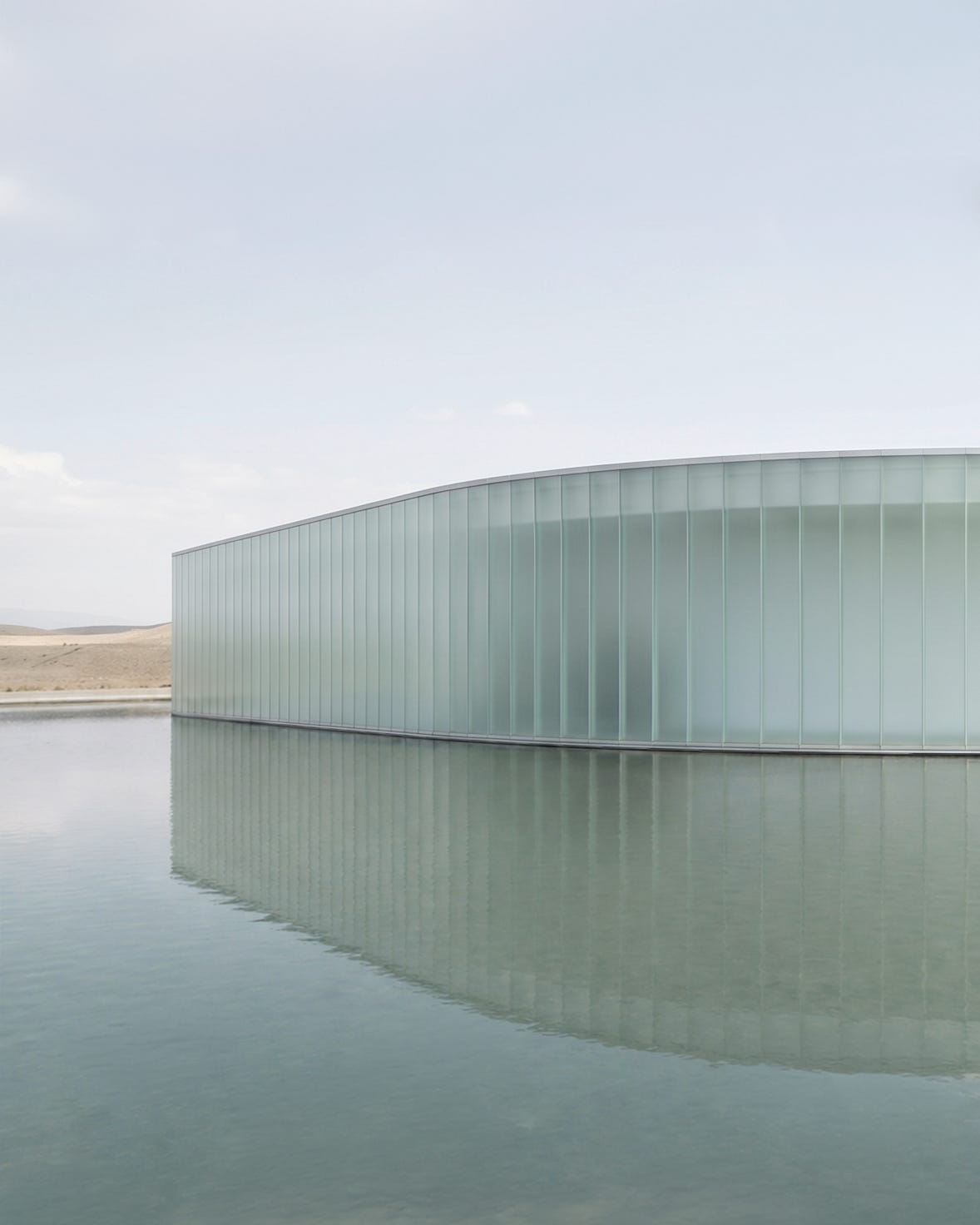
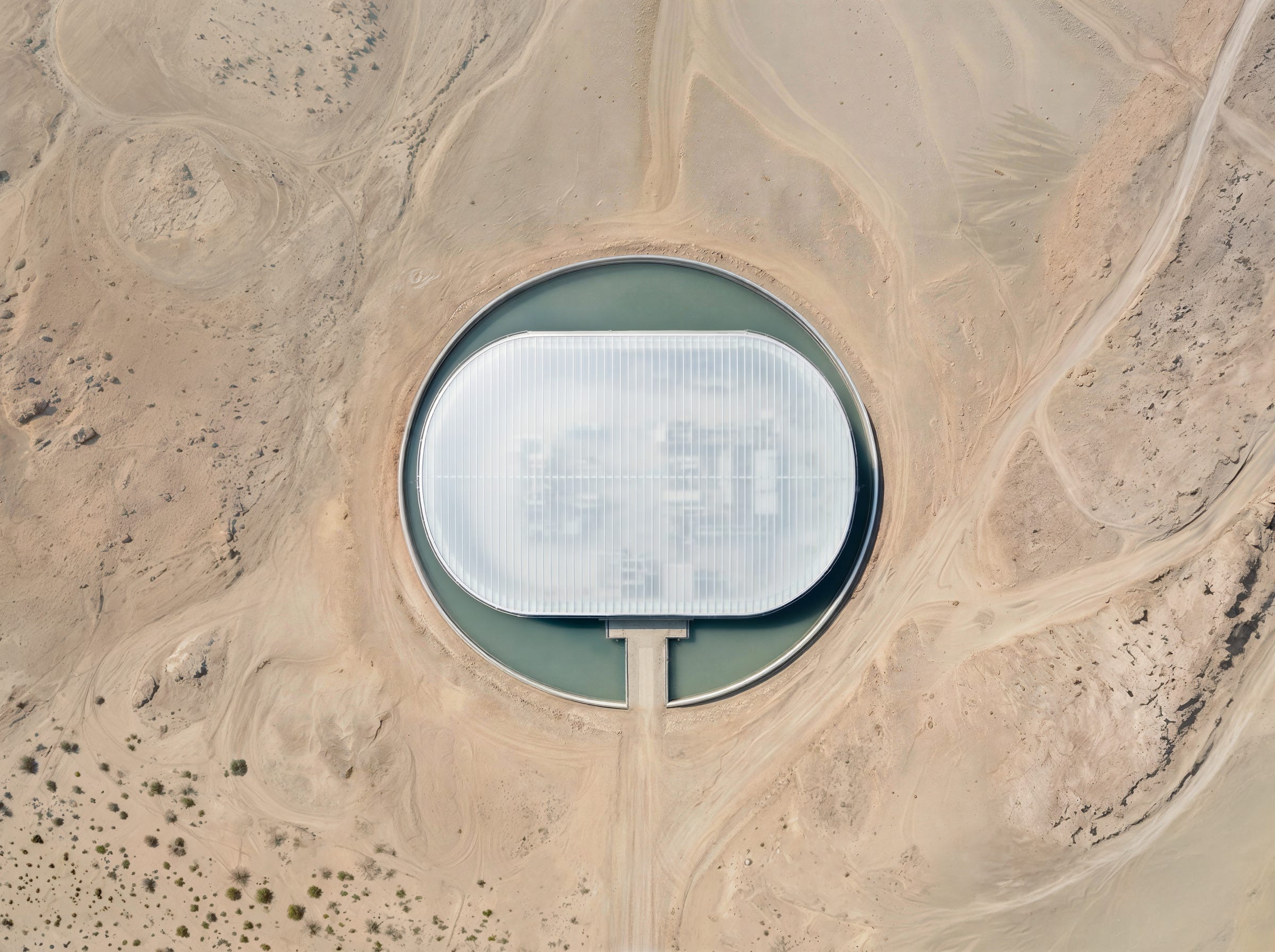
Taken together, these interventions reposition the data center—not as an extractive, imposing object, but as infrastructure that is quiet, embedded, and responsive—opening up a new visual and spatial vocabulary for what it could become.
III. Where We Go From Here
Today’s conversation is stuck in the moral echo-chambers of “should data centers exist”? And it’s an important question to ask, to challenge, and to fight for. As it stands, the potential benefits these facilities offer are enormously overshadowed by their flawed operational design and execution.
At the same time, we know that these data centers aren’t going anywhere. While the conversation is often tied to AI, this infrastructure is the backbone of our society and way of life today—there isn’t a single industry that doesn’t directly benefit from access to more compute.
As long as there is money to be made, these facilities will always exist in some way, shape, or form. But that doesn’t mean we’re powerless in what they look like, or how they impose themselves upon our communities.
Designer Saul Bass said it best:
Aesthetics are your problem and mine. Nobody else’s. The fact of the matter is I want everything we do, that I do personally, that our office does, to be beautiful. I don’t give a damn whether the client understands that that’s worth anything, or whether the client thinks it’s worth anything, or whether it is worth anything. It’s worth it to me. It’s the way I want to live my life. I want to make beautiful things even if nobody cares.
If we care enough to make these data centers beautiful, they might just be better as a result.
Thanks for reading
Findings is a project by Mouthwash Studio, a design studio centered on new ideas and defining experiences. Learn more about what we’re doing with Findings here. In the archive, you’ll find all our work to date surrounding this project.
This publication is 100% free and is supported by your time and appreciation. If you liked reading this, please share it with somebody who you think might also enjoy it.
Is there something we should cover? Respond to this email or send us a message at findings@mouthwash.co to get in touch.
Fine, we'll do it
guys, you're out of your depth on this topic. since you spent the time writing this I think it deserves a direct response: you've taken something insanely complex and reduced it to the most naively simplistic representation of itself. design isn't "why can't it be pretty." its about solving real problems within real constraints (financial, logistical, engineering, regulatory, environmental, operational, security, schedule) to deliver something that actually functions in the world.
"overconsumption of natural resources, lack of consideration towards local wildlife, and harmful byproducts pumped into our air aren't moral preconditions for these data centers. they're design flaws" = these aren't flaws of the building design, they're consequences of the computation happening inside the building. wrapping a different skin around it changes none of the underlying physics.
hyperscale data centers are typically 250,000 to over 1,000,000 square feet on a single floor, because server halls are kept low and wide for structural, electrical, and cooling reasons. you cannot drape that footprint over irregular terrain. site selection demands flat or flattenable land because:
- raised access floors and overhead cable trays require level slabs to fractions of an inch
- diesel generator yards, transformer yards, and chiller plants need flat accessible pads
- fire code requires unobstructed access on multiple sides for emergency vehicles
- cooling infrastructure must be at controlled elevations adjacent to the halls
i mean this BARELY scratches the surface.
that "datacenters disguised as giant ant hills" image is crazy. to actually build it, you'd carve the mountain off, build a flat industrial facility, and then build a fake mountain back on top of it. the environmental impact of that excavation alone would dwarf the impact of just building a normal data center on already flat land. i won't even touch the costs, or the complete impossibility of having any sort of *anything* existing underneath an impenetrable mountain.
data centers have non negotiable rooftop and adjacent yard infrastructure:
- massive rooftop air handler units or evaporative cooling towers
- chiller plants and dry coolers that must reject heat to the atmosphere
- often 40 to 80 plus diesel generators, each the size of a shipping container, for backup power, with associated fuel tanks
- switchyards and substations sized for 100 to 500 mw of incoming power
- security fencing with significant standoff distance
you cannot hide this from above. the qts fayetteville facility you show in your lead image looks the way it does because of these requirements, not because engineers and architects never realized something can look aesthetically pleasing.
try to think through your giant reflective building for more than a second:
- mirrored exteriors are notorious bird strike hazards. the us fish and wildlife service estimates building collisions kill hundreds of millions of birds annually. a massive mirrored hyperscale facility in a rural area with active flyways would be an ecological catastrophe, exactly the opposite of your stated goal.
- mirrors reflect concentrated light. vegas's vdara hotel famously created a "death ray" that burned guests at the pool. london's walkie talkie tower melted a jaguar parked on the street below. a mirrored data center facade in arizona or nevada becomes a liability and a wildfire risk.
- mirrored exteriors require constant cleaning to maintain the effect. in rural settings with dust, pollen, bird droppings, and weather, the "invisible" facade looks streaked and filthy within weeks. it would be a TERRIBLE idea.
in terms of noise, data center noise comes from three primary sources: cooling fans, chillers and pumps, and backup generator testing
you CANNOT cover the air intakes and exhausts with sound dampening material because they have to move millions of cfm of air. acoustic louvers and baffles exist and are used, but they impose a backpressure penalty that reduces cooling efficiency, which means more energy use to move the same air. the "cloud building" rendering ignores that the loudest parts of the facility are the openings, which by definition can't be acoustically sealed.
there are SO many things well informed designers who understand this space could focus on...
a hyperscale site is selected primarily on access to 100 to 1000 mw of dispatchable power, fiber backbone proximity, tax incentives, water rights where applicable, and developable flat land. aesthetic integration with surroundings doesn't make the top ten criteria. you can't put a beautifully camouflaged data center in a place that doesn't have a high voltage transmission corridor, and those corridors largely determine where these things go.
ugly boxes tend to be ugly for reasons. tilt up concrete is fast, cheap, fire rated, hurricane rated, and provides excellent thermal mass. standardized rectangular footprints allow for repeatable hot aisle cold aisle layouts and modular electrical and mechanical rooms. every deviation from the box adds cost, schedule, and operational complexity.
also these facilities are now considered critical infrastructure. they have hardened perimeters, vehicle barriers, mantrap entries, and substantial setbacks from public roads. ALL of these renderings show facilities that just magically... exist... in huge unrealistic empty plots of land.
btw: custom facade systems, organic geometries, mirrored cladding, adobe inspired earthworks, these all have substantially higher embodied carbon and material cost than standard tilt up. if your goal is environmental harm reduction, optimizing for visual softness usually makes the carbon footprint worse, not better.
it's just kind of crazy to call this "findings by mouthwash", as if it simply never occurred to the massive # of firms/contractors/stakeholders that buildings can look aesthetically pleasing.
there are VASTLY more rich (and challenging, and nuanced, and complex) design problems to solve in this space.